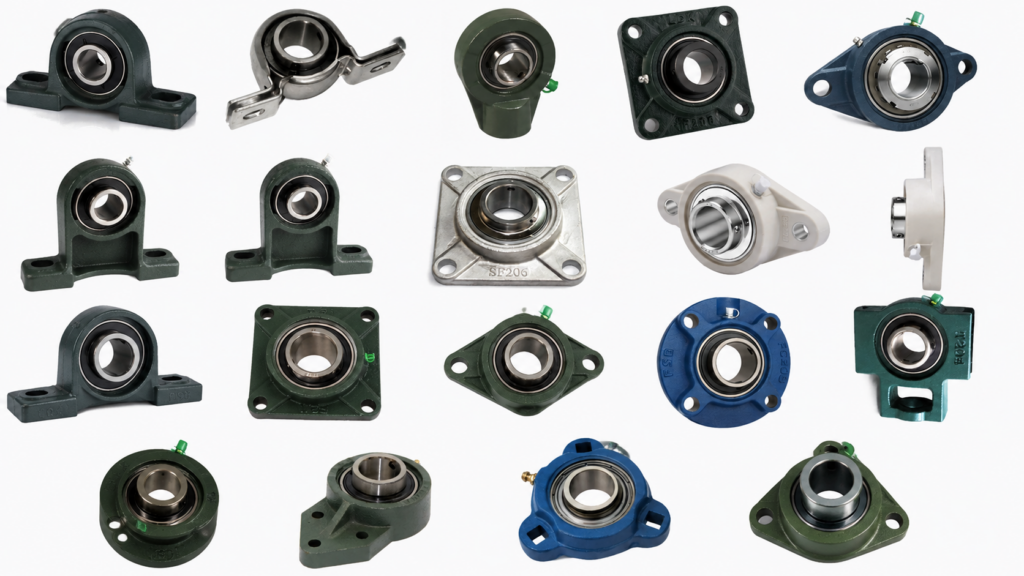




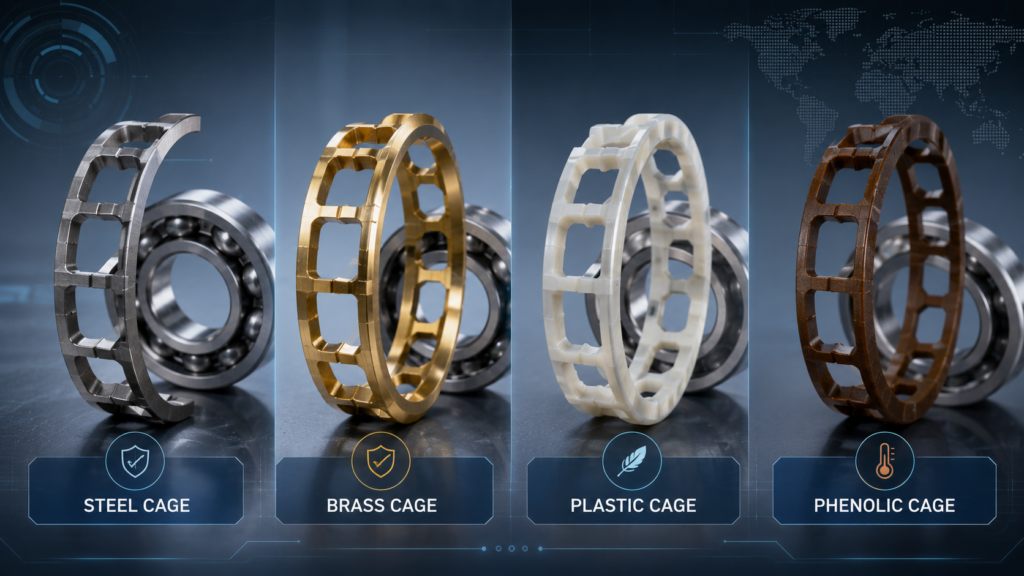
When purchasing bearings, many engineers and buyers notice that bearings with similar dimensions may use completely different cages. Some bearings are equipped with steel cages, while others use brass, polyamide, phenolic resin, or even aluminum cages.
Does a brass cage always perform better than a steel cage? Why do high-speed bearings often use phenolic cages? How should the cage material be selected?
This article explains the common bearing cage structures, cage materials, and their applications to help you choose the right bearing for your equipment.
What Is a Bearing Cage?
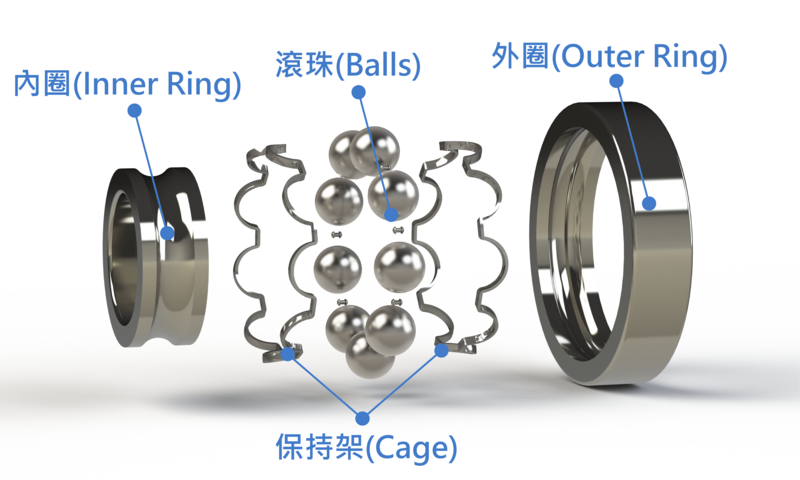
A bearing cage, also called a bearing retainer, is an important component inside a rolling bearing.
Its primary functions include:
Separating rolling elements
Keeping balls or rollers evenly spaced
Guiding rolling elements during operation
Reducing friction between rolling elements
Improving lubricant circulation
Ensuring stable bearing operation at high speed
Although the cage does not directly carry the main load, its design and material have a significant influence on bearing performance, noise, speed capability, and service life.
Why Is Bearing Cage Material Important?
Different applications require different cage materials.
The ideal cage should provide:
High mechanical strength
Good wear resistance
Low friction
High dimensional stability
Suitable temperature resistance
Reliable lubrication performance
There is no single cage material that is best for every application. The correct choice depends on bearing type, operating speed, load, temperature, lubrication, and working environment.
Common Bearing Cage Materials
1.Pressed Steel Cage
Pressed steel cages are the most widely used cage type for small and medium-sized bearings.
Advantages
Economical
High production efficiency
Good strength
Suitable for mass production
Typical Applications
Радиальные шарикоподшипники
Tapered Roller Bearings
Thrust Ball Bearings
Needle Roller Bearings
2.Machined Brass Cage
Brass cages are commonly used in medium and large bearings operating under heavy loads or severe conditions.
Advantages
Excellent strength
Outstanding wear resistance
High temperature capability
Good vibration resistance
Typical Applications
Large Cylindrical Roller Bearings
Spherical Roller Bearings
Large Deep Groove Ball Bearings
Large Angular Contact Bearings
3.Engineering Polymer Cage
Engineering polymer cages are becoming increasingly popular in modern high-speed bearings.
Advantages
Lightweight
Low operating noise
Excellent self-lubricating properties
Low centrifugal force
Suitable for high-speed applications
Typical Applications
Electric Motor Bearings
Радиальные шарикоподшипники
Self-aligning Ball Bearings
Needle Roller Bearings
4.Phenolic Resin Cage
Phenolic cages are widely used in high-speed precision bearings.
Advantages
Extremely lightweight
Excellent high-speed performance
Low friction
High dimensional stability
Typical Applications
Machine Tool Spindle Bearings
Precision Angular Contact Bearings
High-Speed CNC Equipment
5.Aluminum Cage
Aluminum cages are mainly used for special bearing applications where lightweight construction is important.
Advantages
Low weight
Good corrosion resistance
Suitable for large bearings
Bearing Cage Structures Used for Different Bearing Types
The cage structure varies depending on bearing type and bearing size.
Bearing Type Common Cage Material
Deep Groove Ball Bearing Pressed Steel, Brass
Self-aligning Ball Bearing Pressed Steel, Polymer, Brass
Cylindrical Roller Bearing Pressed Steel, Polymer, Brass
Double-row Cylindrical Roller Bearing Machined Brass
Spherical Roller Bearing Pressed Steel or Brass
Needle Roller Bearing Pressed Steel, Polymer
Angular Contact Ball Bearing Phenolic, Steel, Brass
Tapered Roller Bearing Pressed Steel or Machined Steel
Thrust Ball Bearing Pressed Steel or Solid Cage
Thrust Roller Bearing Solid Cage
Generally speaking:
Small bearings usually use pressed cages.
Large bearings usually use machined solid cages.
Cage Selection for Common Bearings
Радиальные шарикоподшипники
Outside Diameter ≤ 400 mm
Pressed Steel Cage
Pressed Brass Cage
Outside Diameter > 400 mm
Machined Brass Cage
Self-aligning Ball Bearings
D ≤ 200 mm
Steel Cage
Polymer Cage
D > 200 mm
Brass Cage
Цилиндрические роликовые подшипники
D ≤ 400 mm
Steel Cage
Polymer Cage
Brass Cage
D > 400 mm
Steel Solid Cage
Brass Solid Cage
Double-row cylindrical roller bearings generally use machined brass cages.
Spherical Roller Bearings
Symmetrical spherical roller bearings generally use pressed steel cages.
Other spherical roller bearings usually adopt machined brass cages.
Needle Roller Bearings
Needle roller bearings generally use:
Pressed Steel Cage
Aluminum Cage
Engineering Polymer Cage
Angular Contact Ball Bearings
Angular contact bearings use different cages depending on design.
Common materials include:
Phenolic Resin
Steel
Brass
Aluminum
Precision grades such as P5, P4 and P2 generally use phenolic cages because of their excellent high-speed capability.
Tapered Roller Bearings
D ≤ 650 mm
Pressed Steel Cage
D > 650 mm
Machined Steel Cage
Thrust Bearings
Thrust ball bearings generally use:
Pressed Steel Cage
Solid Cage
Thrust roller bearings normally adopt solid cages to ensure sufficient strength under axial loads.
How to Choose the Right Bearing Cage?
When selecting a bearing cage, engineers should consider several important factors.
Operating Speed
High-speed applications generally prefer lightweight cages such as phenolic resin or engineering polymer.
Operating Load
Heavy-load applications usually require machined brass or steel cages.
Operating Temperature
High temperatures may require metallic cages because polymers have temperature limitations.
Bearing Size
Large bearings generally require solid cages to provide greater rigidity.
Noise Requirements
Electric motors and precision equipment often use polymer cages because they reduce operating noise.
Common Bearing Cage Failures
Improper cage selection or poor operating conditions may cause:
Cage Wear
Cage Cracking
Cage Deformation
Cage Fracture
Roller Skewing
Abnormal Noise
Bearing Seizure
These failures often result from poor lubrication, contamination, excessive speed, improper installation, or incorrect bearing selection.
Frequently Asked Questions
Which bearing cage material is the strongest?
Machined brass and steel cages generally provide the highest mechanical strength for heavy-duty applications.
Is a brass cage better than a steel cage?
Not necessarily.
Brass cages are excellent for heavy-duty and high-temperature applications, while steel cages are economical and suitable for most general industrial equipment.
Why do high-speed bearings use phenolic cages?
Phenolic cages are lightweight, generate low centrifugal force, and provide excellent dimensional stability at high rotational speeds.
Are polymer cages suitable for industrial bearings?
Yes.
Engineering polymer cages are widely used in electric motors, pumps, fans, and many high-speed industrial applications.
Can a damaged bearing cage be replaced?
In most cases, replacing only the cage is not recommended. Once the cage has failed, the rolling elements and raceways should also be carefully inspected.
Conclusion
The bearing cage plays an essential role in maintaining stable bearing operation.
Different bearing types require different cage structures and materials depending on speed, load, temperature, lubrication, and application requirements.
Selecting the correct cage material can improve bearing reliability, reduce noise, increase operating speed, and significantly extend service life.
If you are unsure which bearing cage is suitable for your application, consulting an experienced bearing engineer before selection is always recommended.
Contact USU Bearing
Need help selecting the right bearing or cage material?
Our engineering team can provide professional support for:
Bearing Selection
Bearing Application Analysis
OEM Bearing Manufacturing
Bearing Failure Analysis
Technical Consultation
USU Bearings
Professional Bearing Solutions for Global Industry