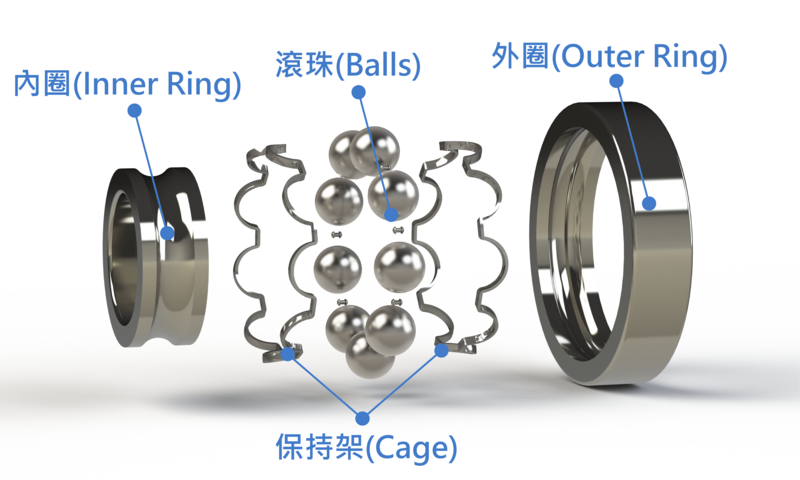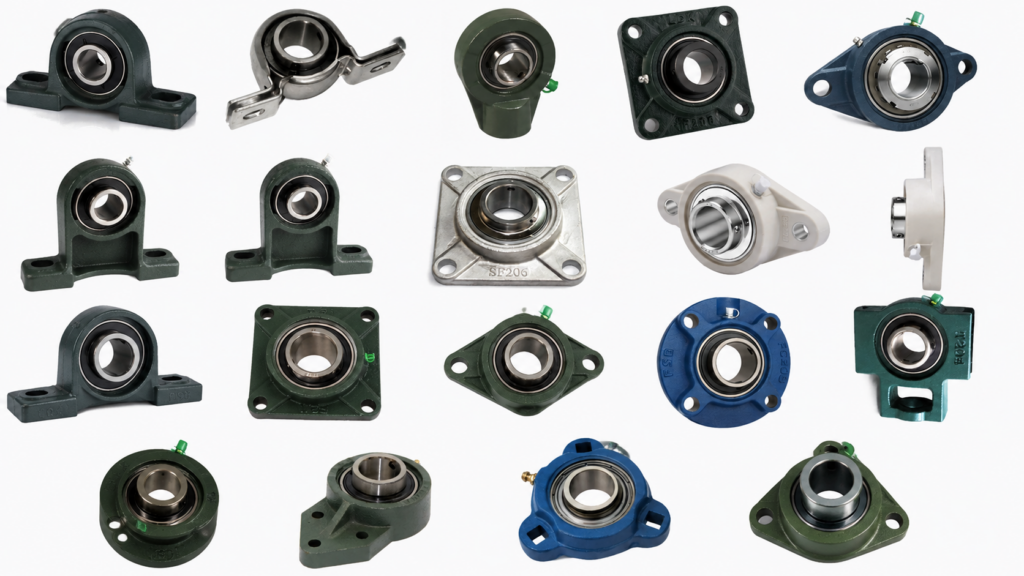




Whether you are purchasing bearings for industrial equipment, electric motors, agricultural machinery, conveyors, or automotive applications, choosing the right bearing supplier is just as important as choosing the correct bearing model.
In today’s global bearing market, buyers are faced with countless brands, suppliers, and price options. While competitive pricing is important, selecting bearings based only on the lowest quotation often leads to higher maintenance costs, unexpected downtime, and premature bearing failure.
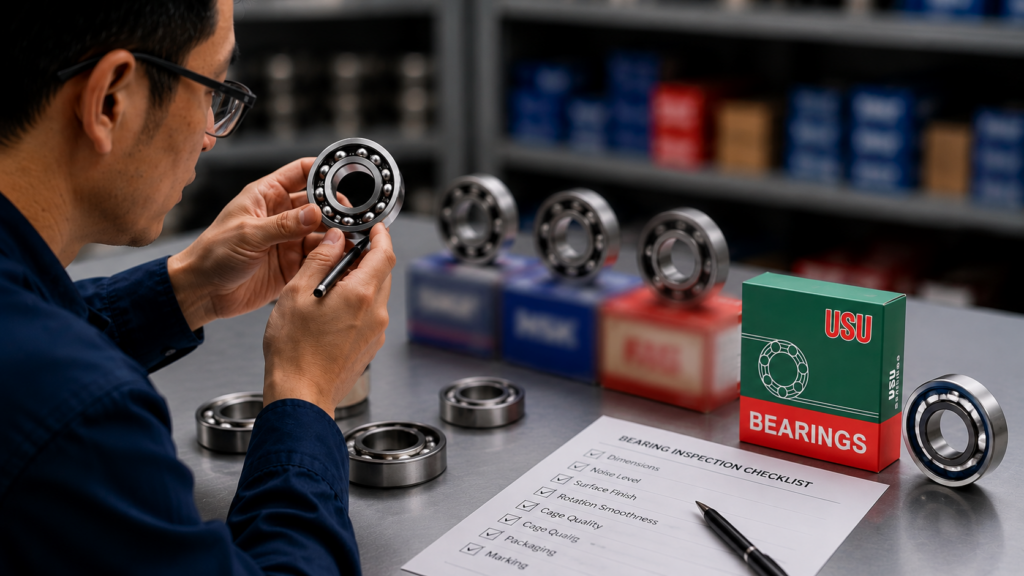
This guide explains the most common purchasing mistakes and provides practical recommendations to help engineers, maintenance teams, distributors, and buyers make better purchasing decisions.
Why Bearing Quality Matters
Bearings are among the most critical components in rotating equipment.
Although relatively small in size, they directly influence:
Equipment reliability
Operating efficiency
Energy consumption
Noise and vibration
Maintenance costs
Service life
Production safety
A low-quality bearing may appear identical to a premium product, but differences in material quality, heat treatment, machining accuracy, lubrication, and quality control can significantly affect performance.
For this reason, purchasing decisions should never be based on price alone.
Common Mistake 1: Choosing Bearings Only by Price
Price is always an important consideration, but it should not be the only factor.
Extremely low-priced bearings may achieve cost reductions by using:
Lower-grade bearing steel
Inferior heat treatment
Reduced machining accuracy
Lower-quality cages
Inadequate quality inspection
Although the initial purchase cost may be lower, frequent replacements and equipment downtime often result in much higher overall operating costs.
Instead of comparing only unit prices, buyers should evaluate the total cost of ownership throughout the bearing’s service life.
Common Mistake 2: Ignoring the Supplier’s Manufacturing Capability
Not every bearing supplier has the same manufacturing or quality-control capabilities.
Before placing an order, it is worth understanding:
Manufacturing experience
Production capacity
Quality management system
Inspection equipment
Export experience
OEM capability
Technical support
A reliable supplier should be able to provide consistent product quality rather than relying only on attractive marketing materials.
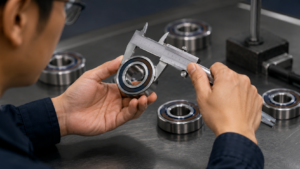
Common Mistake 3: Believing Unrealistic Performance Claims
Some suppliers advertise exceptionally long bearing life or extremely high load capacities without providing technical evidence.
When evaluating product performance, buyers should request:
Product specifications
Material information
Inspection reports
Dimensional tolerances
Performance data when available
Technical data is generally more reliable than promotional language.
Common Mistake 4: Purchasing from Unknown Sources
Counterfeit and low-quality bearings continue to exist in many markets.
To reduce purchasing risks, consider buying from:
Original manufacturers
Authorized distributors
Established industrial suppliers
Companies with verified export experience
Choosing reputable suppliers also makes technical support and after-sales service more accessible.
Common Mistake 5: Selecting the Wrong Bearing Instead of a Poor Bearing
Many bearing failures are caused not by manufacturing defects, but by selecting the wrong bearing for the application.
Before purchasing, buyers should confirm:
Bearing type
Bearing dimensions
Load conditions
Rotational speed
Operating temperature
Lubrication method
Working environment
Required sealing arrangement
Providing complete application information allows suppliers to recommend more suitable bearing solutions.
Common Mistake 6: Ignoring Product Certifications
A reliable supplier should operate under a documented quality management system.
Common certifications may include:
ISO 9001 Quality Management System
CE (where applicable for the supplied product or assembly)
Other customer- or industry-specific certifications
Certificates alone do not guarantee product quality, but they demonstrate that the manufacturer follows defined quality procedures.
Common Mistake 7: Not Inspecting Samples Before Bulk Orders
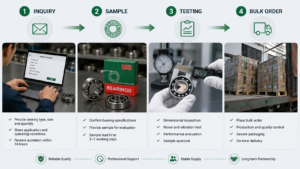
For OEM or large-volume projects, requesting samples before mass production can reduce purchasing risk.
Sample evaluation may include:
Dimensional inspection
Surface finish
Rotation smoothness
Noise testing
Packaging verification
Marking inspection
Sample approval helps avoid costly production issues later.
Common Mistake 8: Ignoring Packaging and Traceability
Professional manufacturers generally provide:
Product identification
Batch numbers
Packaging protection
Storage recommendations
Traceable production information
Proper packaging helps protect bearings from contamination, corrosion, and transportation damage.
Common Mistake 9: Overlooking Technical Support
Good suppliers do more than simply ship products.
Technical assistance before and after purchase may include:
Bearing selection
Cross-reference support
Installation guidance
Lubrication recommendations
Failure analysis
OEM customization
Engineering support can be particularly valuable when solving complex application problems.
Common Mistake 10: Ignoring After-Sales Service
Even with strict quality control, unexpected issues may occasionally occur.
Before placing an order, buyers should understand:
Warranty policy
Quality claim procedures
Replacement process
Technical response time
Customer support channels
A supplier with responsive after-sales service can reduce downtime and improve long-term cooperation.
How to Choose a Reliable Bearing Supplier
Before making a purchasing decision, consider the following checklist.
Can the supplier provide complete technical specifications?
Does the supplier have stable manufacturing capability?
Are quality inspections documented?
Can samples be provided?
Does the supplier understand your application?
Is technical support available?
Is after-sales service clearly defined?
Choosing a supplier should focus on long-term reliability rather than only short-term pricing.
Bearing Purchasing Checklist
Before submitting a quotation request, prepare the following information whenever possible:
Bearing model
Bearing dimensions
Application equipment
Operating speed
Load conditions
Working temperature
Lubrication method
Required quantity
Packaging requirements
OEM branding requirements (if applicable)
Providing complete information allows suppliers to recommend more suitable products and prepare more accurate quotations.
Frequently Asked Questions
Is the cheapest bearing always the best value?
Not necessarily. A lower purchase price may lead to higher maintenance costs if bearing life is significantly reduced.
How can I identify a reliable bearing supplier?
Look beyond pricing. Consider manufacturing capability, quality management, technical support, product consistency, and customer service.
Should I request samples before bulk orders?
Yes. Sample evaluation is recommended for OEM projects and large purchasing quantities.
What information should I provide when requesting a quotation?
Provide the bearing model, application, operating conditions, quantity, packaging requirements, and any OEM specifications.
Are quality certificates enough to guarantee bearing quality?
Certificates are helpful, but they should be considered together with manufacturing capability, inspection processes, and technical support.
Conclusion
Purchasing bearings is not simply about finding the lowest price.
The right bearing combines appropriate design, reliable manufacturing quality, proper application selection, and professional technical support.
By understanding common purchasing mistakes and evaluating suppliers carefully, buyers can reduce risk, improve equipment reliability, and lower long-term operating costs.
A well-informed purchasing decision is often the first step toward longer bearing life and more stable equipment performance.
Contact USU Bearing
Looking for a reliable bearing supplier?
Our engineering team can assist with:
Bearing Selection
OEM & Private Label Manufacturing
Technical Consultation
Failure Analysis
Custom Packaging Solutions
International Export Support
USU Bearing
Reliable Bearing Solutions for Global Industry.