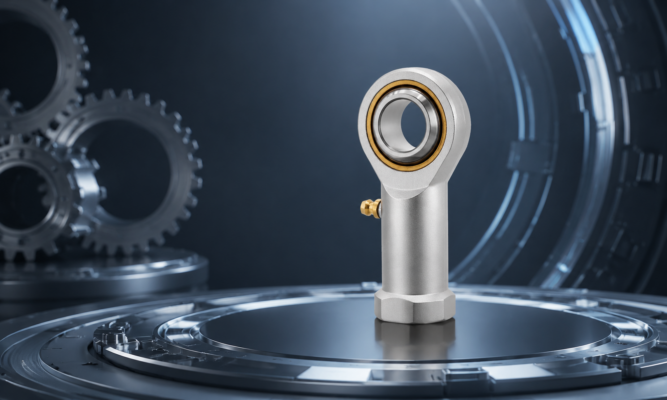




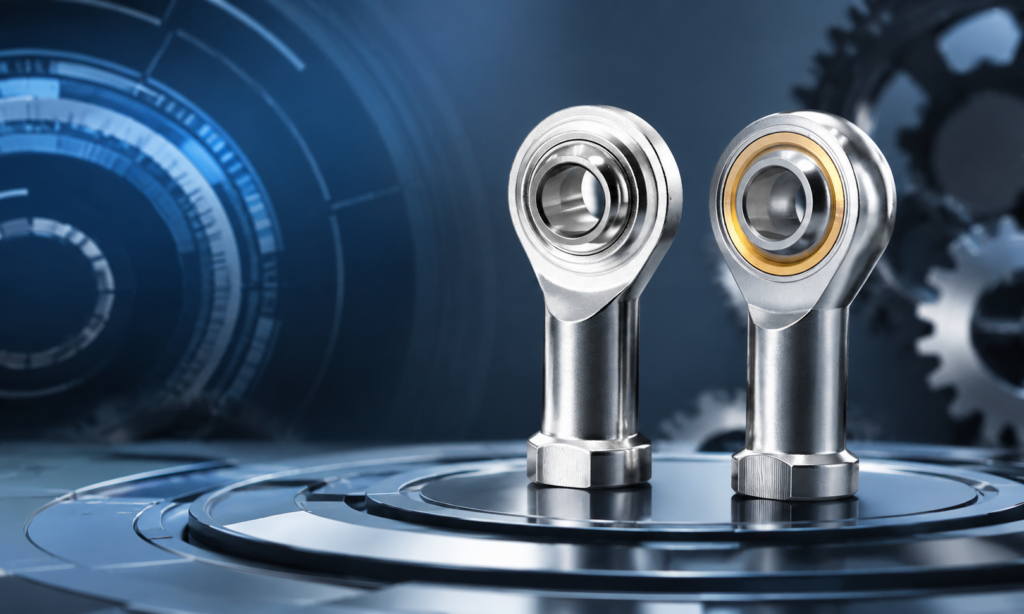
A rod end bearing is a specialized unit that integrates a connecting rod structure with a spherical plain bearing. Thanks to this unique “spherical plain bearing + rod” design, it effectively solves challenges related to complex motion transmission and angular compensation within mechanical systems, making it widely used in critical areas such as push rods and connecting rods across various industrial equipment.
With years of deep expertise in the bearing industry, Wuxi USU Bearing provides high-quality rod end bearing solutions. The following overview covers key aspects—such as core structure, thread characteristics, and application scenarios—to help industry professionals make precise selections and ensure efficient application.
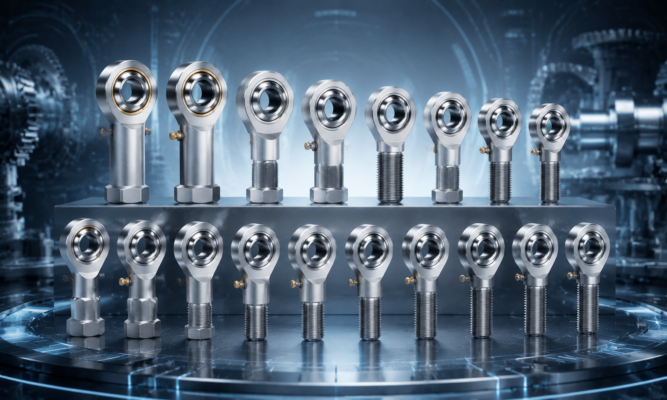
Table of Contents
- Definition of Rod End Bearings
- Types of Rod End Bearings
- Applications of Rod End Bearings
- Conclusion
1. Definition of Rod End Bearings
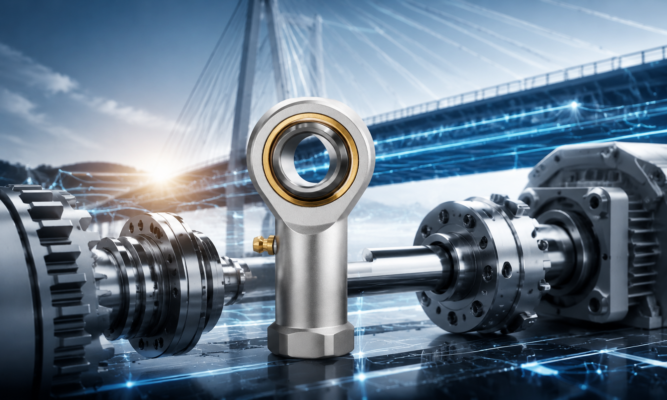
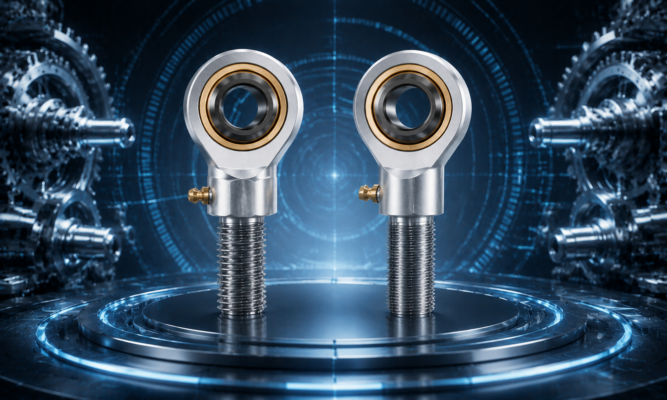
Rod end bearings,also known as rod end spherical plain bearings, are essentially hinges integrating spherical plain bearings with threaded rod bodies. Their core function is to transmit tensile and compressive loads while allowing a certain angle of deflection and misalignment at the connection point. With dual functions of load-bearing and flexible connection, they serve as a “bridge” for connecting mechanical components and achieving precise transmission.
Compared to standard spherical plain bearings, the key advantage of rod end bearings lies in their “integrated connection design”:
• Standard spherical plain bearings: Consist solely of an inner ring with a spherical outer surface and an outer ring with a spherical inner surface; primarily responsible for load transmission.
• Rod end bearings: Build upon the standard spherical plain bearing by adding a standardized threaded rod body. This eliminates the need for additional connecting parts, allowing for direct attachment to equipment components like push rods and connecting rods, thereby significantly simplifying assembly and enhancing connection stability.
Compared to standard spherical plain bearings, the key advantage of rod end bearings lies in their “integrated connection design”.
2.Types of Rod End Bearings
The threaded rod body is central to the bearing’s connecting function; the thread type directly determines the installation method, suitable applications, and connection stability. Wuxi USU rod end bearings cover a full range of thread specifications—including internal and external threads, right-hand and left-hand threads, and coarse and fine pitches. They strictly adhere to the GB/T 197 standard, utilizing 6H tolerance grades for internal threads and 6g for external threads to ensure excellent compatibility with standard fasteners.
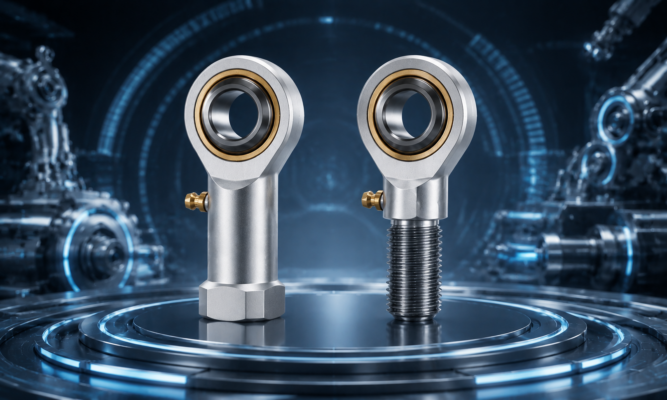
Internal vs External Threads
These differ in structure and are suited to different applications:
Internal Thread: The bearing features internal threading, requiring the mating rod end to be machined with a corresponding external thread. Secured by screwing the components together, this type offers a firm connection that is resistant to loosening.
Male thread: The bearing features external threads, requiring the mating rod end to be internally threaded; the connection is secured by tightening. It offers easy installation, removal, and maintenance.
Standard vs Reverse Threads
The fundamental difference lies in the direction of rotation; the key distinctions and application scenarios are as follows:
Standard thread: Tightens when rotated clockwise and loosens when rotated counter-clockwise. This is the most common thread type in engineering and aligns with most users’ operational habits.
• Reverse thread: Tightens when rotated counter-clockwise and loosens when rotated clockwise. Primarily used in specialized applications to prevent loosening caused by equipment rotation .
Coarse vs Fine Threads
Meeting different load and precision requirements:
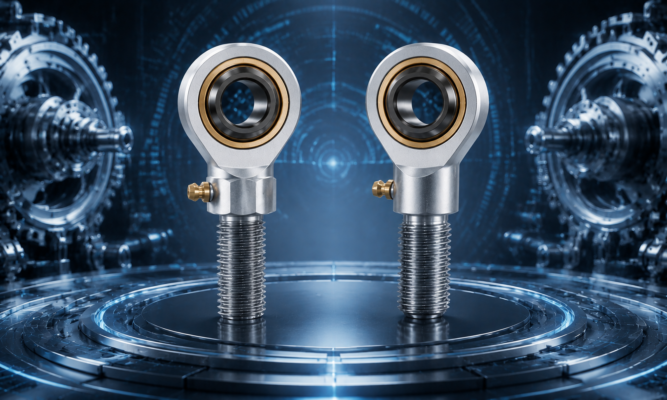
Coarse thread: Features a large pitch and deep thread profile; the pitch does not need to be specified. Offers easy assembly/disassembly, high resistance to stripping, and excellent load-bearing performance. Suitable for heavy-load and high-vibration applications.
Fine thread: Features a small pitch and a higher number of threads per unit length; the pitch must be specified. Offers superior self-locking capabilities and high adjustment precision; the shallower thread depth minimizes the impact on the rod’s structural strength.
3. Applications of Rod End Bearings
Thanks to their flexible connection capabilities, excellent load-bearing performance, and broad thread compatibility, rod end bearings have found widespread use across various industrial sectors, with push rods, connecting rods, and automation equipment serving as core application areas.

Automation Equipment Sector
Components such as push rods, connecting rods, and robotic arm joints in automation equipment require frequent reciprocating oscillation and angular adjustment.
Specific applications include: push rod connections in automated production lines, robotic arm joint articulations, oscillating mechanisms in automated packaging machines, and press-fit actuator connections in battery assembly lines. Particularly in precision automation equipment. This reduces equipment downtime costs and boosts production efficiency, making them ideal for automation scenarios with high cleanliness standards, such as food processing machinery and medical equipment.
Construction Machinery Sector
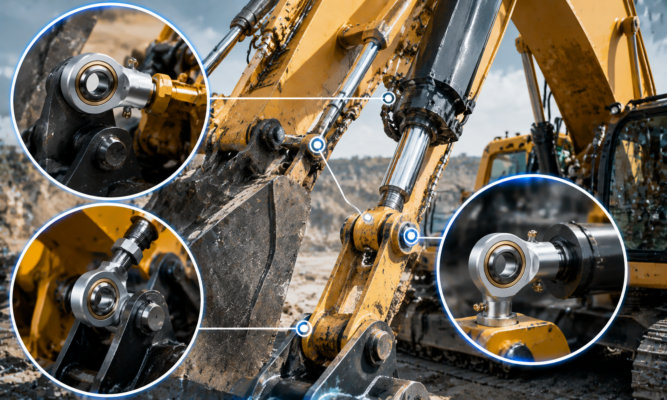
Components such as push rods, connecting rods, and hydraulic cylinder ends in construction machinery must withstand immense impact loads, vibrations, and harsh environmental conditions. Consequently, the strength, wear resistance, and contamination resistance of the rod end bearings are critical.
Specific applications include: piston rod connections for excavator boom and stick cylinders, articulated steering systems and bucket lift cylinder connections for wheel loaders, and linkage articulations for cranes.
Agricultural Machinery Sector
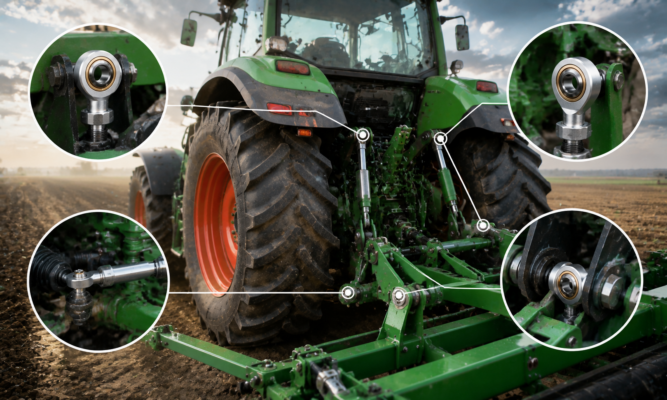
Components such as three-point hitch systems, steering systems, and linkage mechanisms in agricultural machinery operate in environments exposed to dust, mud, and pesticides. They must endure frequent oscillation and impact, making the reliability of rod end bearings a direct factor in operational efficiency.
Specific applications include: connections for adjustable lift rods, stabilizer bars, and top links on tractors, as well as grain tank adjustment mechanisms and oscillating linkage bars for grates on combine harvesters. These bearings accommodate the complex motion requirements of agricultural machinery, ensuring stable power transmission during operation.
Additional Application Scenarios
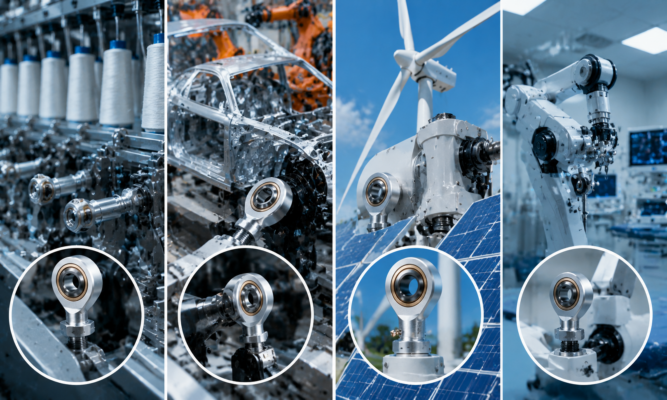
Textile machinery: Connecting rods for rapier and water-jet looms, enabling precise transmission for high-speed reciprocating oscillation;
Automotive industry: Steering tie rods and suspension systems, capable of withstanding fatigue caused by road vibrations;
New energy equipment: Pitch control systems for wind turbines and angle adjustment mechanisms for photovoltaic tracking mounts, ensuring long-term stable operation;
Medical devices: Joints for surgical robots and prosthetic connections; stainless steel construction meets hygiene standards and precision transmission requirements.
4. Conclusion
As the “connecting hub” of mechanical systems, the performance and selection of rod end bearings directly impact equipment operating efficiency, stability, and service life. Wuxi USU Bearing upholds the philosophy of “Superior Attitude, Superior Quality, Superior Service.” Dedicated to the R&D, production, and sales of rod end bearings, the company leverages a comprehensive product portfolio, rigorous quality control, and professional technical support to provide high-quality, highly compatible rod end bearing solutions to customers across various industries. If you have any questions regarding the selection or application of rod end bearings, please feel free to contact Wuxi USU Bearing. Backed by our professional technical team, we provide one-on-one selection guidance and technical support to ensure the efficient and stable operation of your equipment.