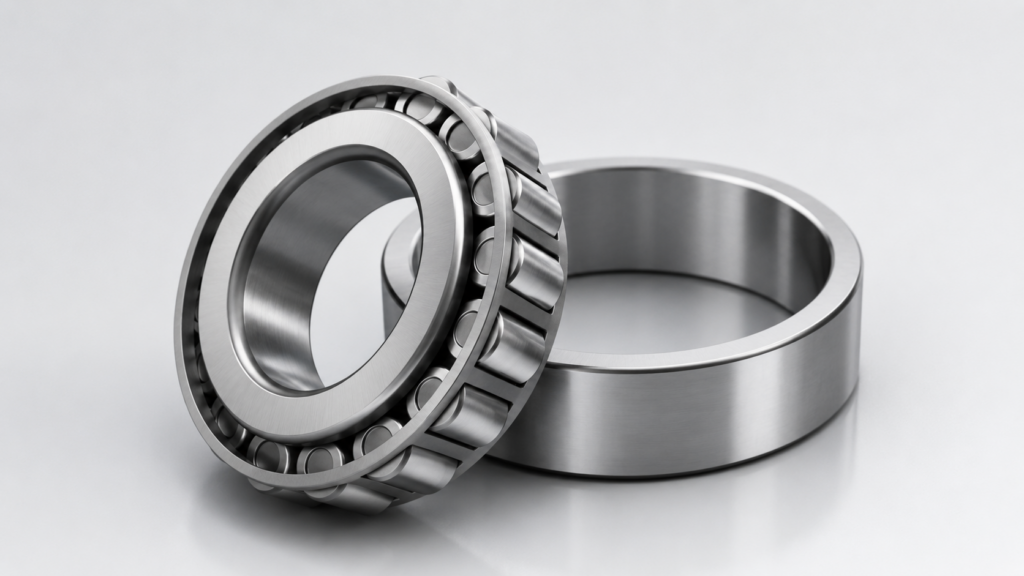




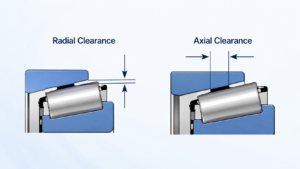
In the practical application of rolling bearings, clearance is one of the most critical factors determining whether a bearing can operate stably. Bearing clearance refers to the amount of axial or radial movement that can occur between the inner and outer rings when the bearing is in an uninstalled state.
Many common equipment operational anomalies—such as excessive temperature rise, increased vibration, abnormal noise, and shortened service life—are directly related to an improper choice of bearing clearance. Therefore, selecting the right bearing clearance based on specific equipment operating conditions is vital for enhancing equipment stability and extending bearing life.
The Role of Proper Clearance in Bearings
Reasonable bearing clearance can effectively improve the operational state of a bearing, which is primarily reflected in the following aspects:
Optimizing Load Distribution: It allows the load to be distributed more evenly among the rolling elements.
Ensuring Thermal Compensation: It guarantees that the bearing operates normally under working temperatures.
Controlling Displacement: It limits the axial and radial displacement of the shaft and housing.
Improving Rotational Accuracy: It minimizes runout during operation.
Reducing Noise and Vibration: It creates a smoother running environment.
Minimizing Friction and Temperature Rise: It prevents early wear and overheating.
Consequently, bearing clearance directly impacts bearing life, operating temperature, rotational precision, and overall equipment stability.
Key Factors Influencing Bearing Clearance Selection
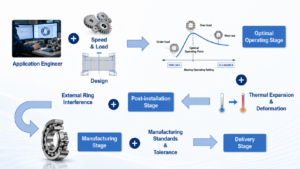
In the actual model selection process, bearing clearance is not a fixed, immutable value; instead, it requires a comprehensive assessment combined with specific working conditions. Typically, the following three factors must be prioritized.
1.The Impact of Fit Types
When a bearing is installed using an interference fit (tight fit), the inner ring expands due to being pressed onto the shaft, and the outer ring contracts due to being housed. Both changes lead to a reduction in the bearing’s actual operational clearance. Therefore, under operating conditions with large interference amounts, a clearance group with a larger initial value must typically be selected.
2.The Impact of Operating Temperature
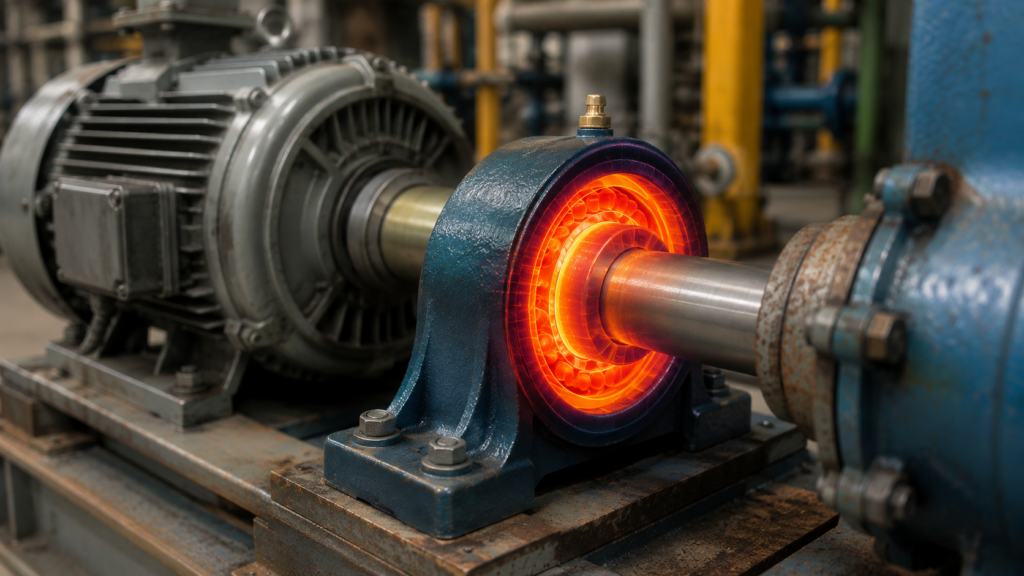
During operation, the temperature of the inner ring, outer ring, and rolling elements is rarely uniform. When the temperature of the inner ring is higher than that of the outer ring, the resulting thermal expansion of the inner ring will further compress and reduce the internal clearance. Especially in high-temperature conditions such as high-speed equipment, electric motors, and spindle systems, sufficient operating clearance must be reserved in advance.
3.The Impact of Material Differences between Shaft and Housing
Because the shaft, bearing housing, and casing materials may have different coefficients of thermal expansion, clearance changes can occur during thermal cycles. Some equipment, after running at high temperatures, may experience a decrease or an unexpected increase in clearance, leading to unstable operation. Therefore, under specialized working conditions, the thermal expansion factors of all combined materials must be thoroughly evaluated.
Working Clearance Requirements for Different Bearing Types
Practical application experience indicates that ball bearings (such as deep groove ball bearings) achieve their most ideal operational state when the working clearance is close to zero. This state yields optimal rotational accuracy and running stability.
Conversely, roller bearings (such as cylindrical or spherical roller bearings) typically require maintaining a small amount of positive working clearance to help dissipate internal heat and reduce running temperature rises.
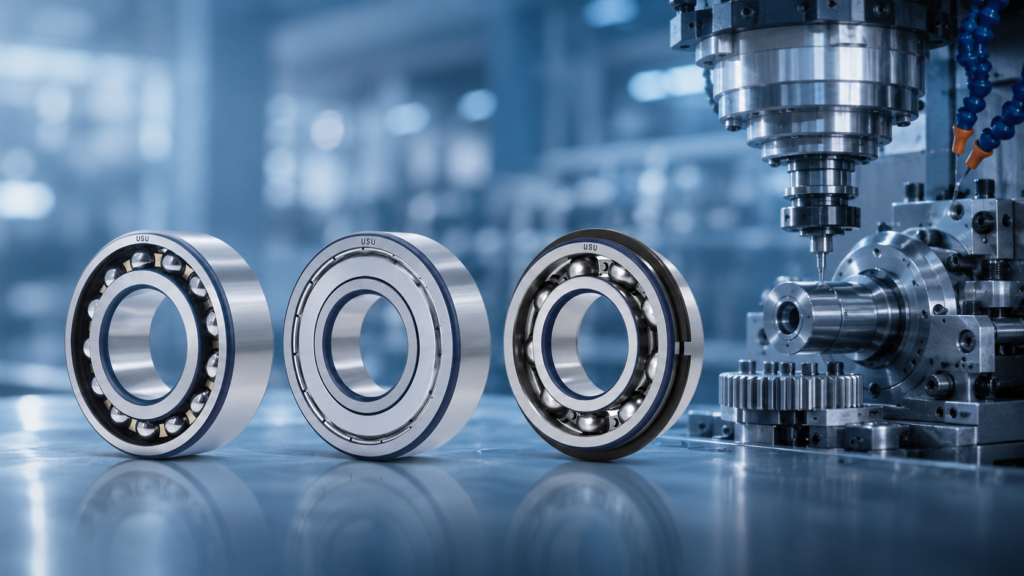
In equipment like machine tool spindles, precision spindles, and high-speed machining equipment, bearings also utilize specific preloading methods. Applying an appropriate preload can eliminate clearance entirely, increase bearing rigidity, enhance rotational precision, and drastically reduce axial play. However, the preload force must be strictly controlled and is usually configured based on the recommended parameters provided by the bearing manufacturer.
Standard Clearance Groups (Taking Deep Groove Ball Bearings as an Example)
According to ISO standards, bearing clearance is classified into several groups: C1, C2, CN (Standard Group), C3, C4, and C5. The clearance value increases sequentially from C1 to C5.
CN (Standard Clearance): The default choice for general machinery experiencing stable temperatures and moderate fits, such as industrial fans and water pumps.
C1 / C2 (Less than Standard): Suited for scenarios with extreme demands for rotational accuracy and minimal vibration, such as precision machine tool spindles and gyroscopes.
C3 / C4 / C5 (Greater than Standard): Applied in heavy-duty, high-speed, or high-temperature equipment where tight interference fits or severe temperature differentials occur, such as automotive wheel hub bearings, paper mill dryer sections, and steel rolling mills.
Conclusion
Although bearing clearance is a detailed technical parameter, it exerts a massive influence on overall equipment performance. Choosing the correct clearance group not only boosts equipment stability but also effectively prolongs the operational life of the bearing.
As a professional bearing service provider, Wuxi USU Bearing continuously delivers accurate bearing selection support, technical consultation, and tailored industry application solutions. For more details regarding bearing clearance standards and product selection guides, please feel free to contact Wuxi USU Bearing for further discussion.