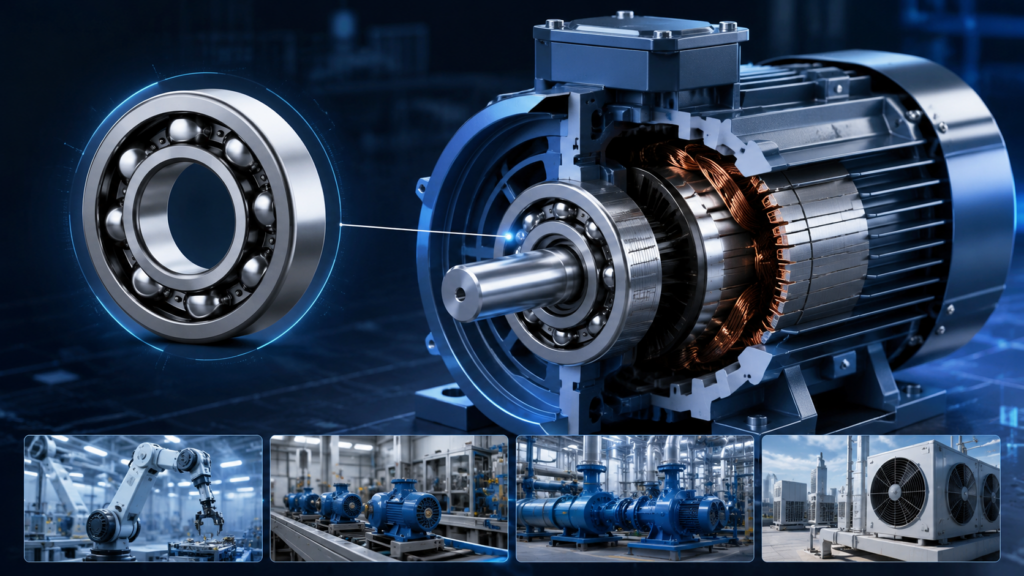



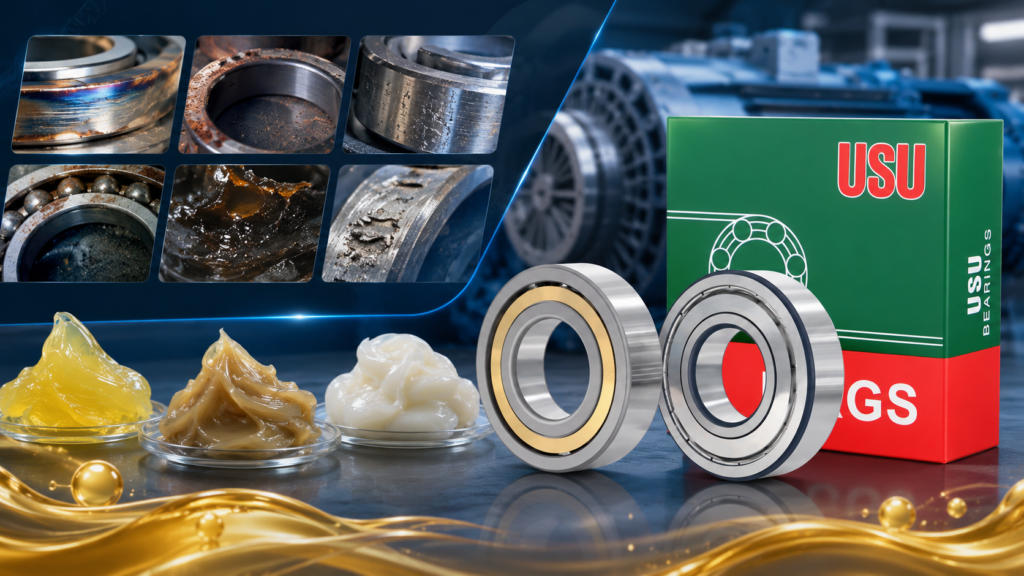
The importance of the lubrication system for rolling bearings goes far beyond simply reducing friction. Lubricants not only form an oil film to isolate metal-to-metal contact, but also play multiple roles such as heat dissipation, corrosion prevention, contamination prevention, and wear reduction.
According to industry statistics, approximately 40% of bearing failures are related to lubrication. However, in many cases, it’s not a matter of “no grease,” but rather problems with the lubrication method, lubrication condition, or lubrication management.
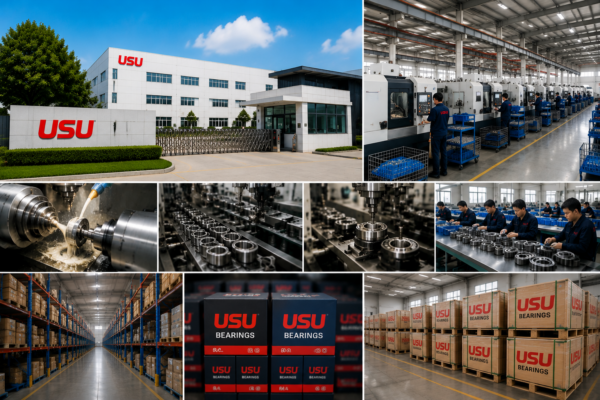
As a professional bearing supplier, USU Bearings recommends that companies regularly check the lubrication condition and develop a scientific maintenance plan based on equipment operating conditions to reduce the risk of bearing failure from the source.
Table of Contents
- Insufficient Lubrication Leading to Increased Friction
- Contaminants Causing Abrasive Wear
- Overheating Caused by Lubricant Aging:
- Adhesive Wear Leading to Bearing Damage
- Fretting Wear Affects Fit Accuracy
- Corrosion Damage Shortens Bearing Life
Insufficient Lubrication Leading to Increased Friction
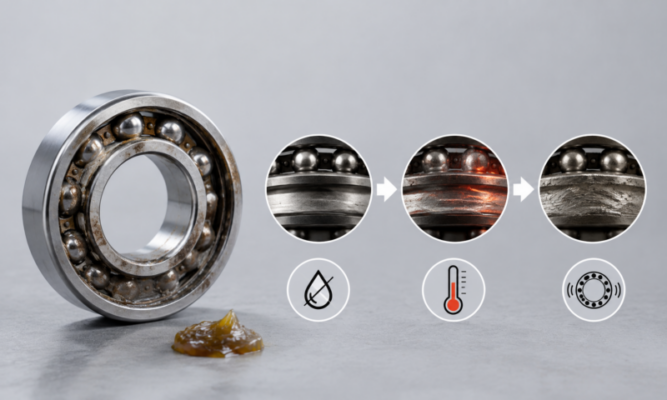
When there is insufficient lubricant, a complete oil film cannot be formed between the rolling elements and the raceway. The bearing will gradually transition from normal lubrication to boundary lubrication or even dry friction.
Common Phenomena
· Rapidly rising bearing temperature
· Blue or brown discoloration of the raceway
· Surface scratches or galling
· Significantly increased friction noise
Recommended Measures
· Regularly replenish grease
· Establish lubrication cycles based on operating conditions
· Avoid prolonged operation with insufficient lubrication
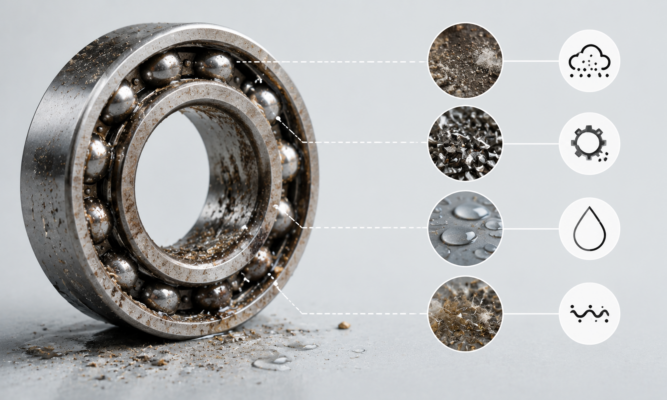
Contaminants Causing Abrasive Wear
Long-term high-temperature operation of equipment can cause oxidation of lubricating oil or grease, gradually reducing its lubrication performance.
Aging lubricant not only reduces cooling capacity but may also produce acidic substances, accelerating bearing corrosion.
Common Phenomena: Grease darkens in color. Coking or hardening occurs. Bearings operate at continuous high temperatures. A black oxide layer forms on the surface. Recommended Measures: Use high-temperature resistant grease. Replace lubricant regularly. Control equipment operating temperature.
Common Phenomena
· Scratches appear on the raceway.
· Grooves form on the surface.
· Rolling element wear intensifies.
· Vibration levels continuously increase
Recommended Measures
· Improve sealing performance
· Keep grease clean
· Replace contaminated
· lubricant regularly
· Check the equipment’s
· dustproof structure.

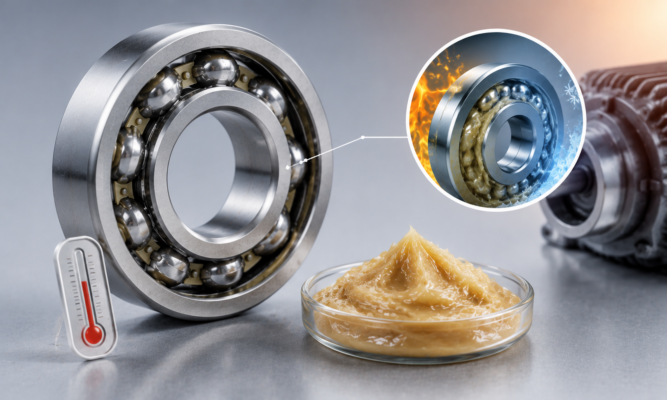
Overheating Caused by Lubricant Aging
Long-term high-temperature operation of equipment can cause oxidation of lubricating oil or grease, gradually reducing its lubrication performance.
Aging lubricant not only reduces cooling capacity but may also produce acidic substances, accelerating bearing corrosion.

Common Phenomena
· Grease darkens in color
· Coking or hardening occurs ·
· Bearings operate at continuous high temperatures
· A black oxide layer forms on the surface.
Recommended Measures
· Use high-temperature resistant grease
· Replace lubricant regularly
· Control equipment operating temperature
Adhesive Wear Leading to Bearing Damage
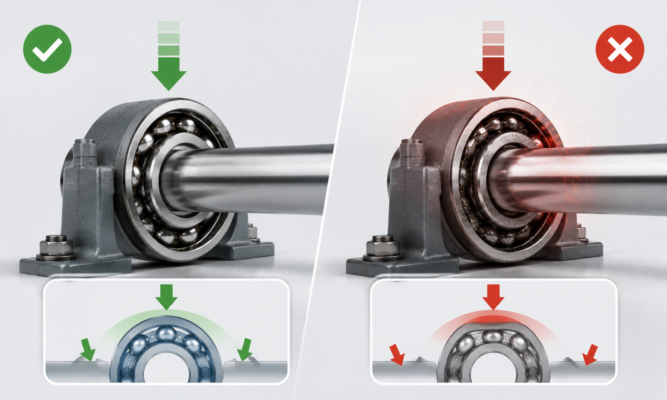
When there is insufficient lubricant, a complete oil film cannot be formed between the rolling elements and the raceway. The bearing will gradually transition from normal lubrication to boundary lubrication or even dry friction.
As rolling continues, the material tears, eventually causing severe abrasion or even bearing seizure.

Common Phenomena
· Ensure stable lubrication
· Avoid overload operation
· Address abnormal temperature rises promptly
Recommended Measures
· Ensure stable lubrication
· Avoid overload operation
· Address abnormal temperature rises promptly
Fretting Wear Affects Fit Accuracy
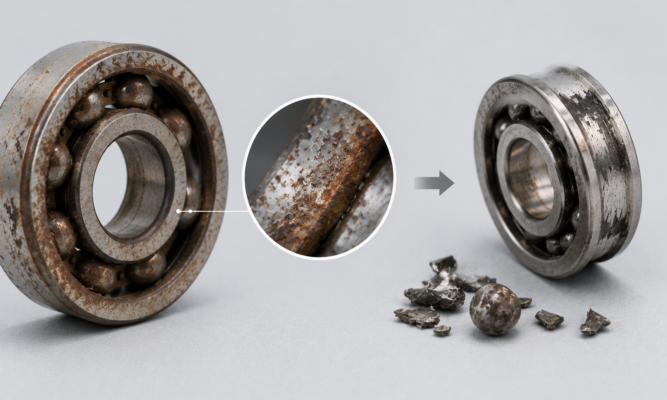
During equipment shutdown, transportation, or low-amplitude vibration, slight relative sliding may occur on the bearing contact surfaces.
Long-term repetitive movement will cause oxidative wear, forming typical reddish-brown wear areas.

Common Phenomena
· Reddish-brown oxide powder
· Pseudo-Burler indentation
· Wear on mating surfaces
· Increased vibration
Recommended Measures
· Reduce long-term equipment vibration;
· Reasonably control fit tolerances;
· Take vibration reduction measures during transportation

Corrosion Damage Shortens Bearing Life
Moisture, chemical media, or degraded lubricants entering the bearing will continuously corrode the raceway surface.
As corrosion progresses, material strength decreases, and fatigue life is significantly shortened.
Common Phenomena
· Surface rust; Pitting corrosion
· Localized spalling;
· Grease emulsification
Recommended Measures
· Use high-temperature resistant grease
· Replace lubricant regularly
· Control equipment operating temperature
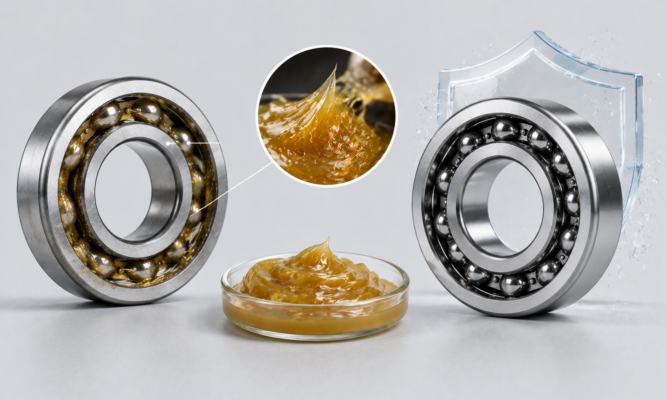
How to Avoid Bearing Lubrication Failure?
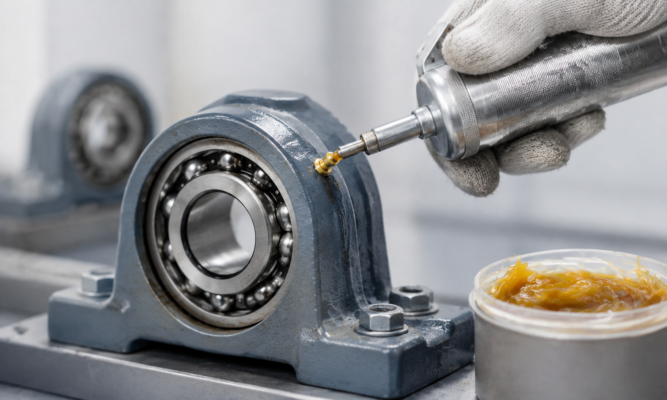
To improve bearing reliability, a scientific lubrication management system is recommended:
Select appropriate lubricant: Choose suitable lubricating oil or grease based on equipment speed, load, and operating temperature.
Control lubrication cycle: Regularly replenish or replace lubricant according to equipment operating time and conditions.
Strengthen condition monitoring:Promptly detect lubrication abnormalities by monitoring vibration, temperature, and noise changes.
Maintain good sealing: Prevent dust, moisture, and contaminants from entering the bearing.

Conclusion
Lubrication condition directly affects bearing operating efficiency and service life. Insufficient lubrication, contamination, overheating, adhesive wear, fretting wear, and corrosion are the six most common lubrication-related failure modes in industrial equipment.
Establishing a scientific lubrication management system and selecting appropriate lubrication solutions based on equipment operating conditions can effectively reduce bearing failure rates and extend equipment lifespan.
USU Bearings adheres to the philosophy of “superior attitude, superior quality, superior service,” providing reliable bearing products and professional technical support to global customers to help equipment achieve more stable, efficient, and long-lasting operation.