



Table of Contents
- What Are Rod End Bearings?
- What Are Rod End Bearings?
- What Are Rod End Bearings?
- What Are Rod End Bearings?
1. What Are Rod End Bearings?
Rod end bearings, also known as heim joints or rose joints, are mechanical components used to provide rotational and oscillating movement between two linked components. They transfer motion and load in industrial and automotive systems.
2. Structure of Rod End Bearings
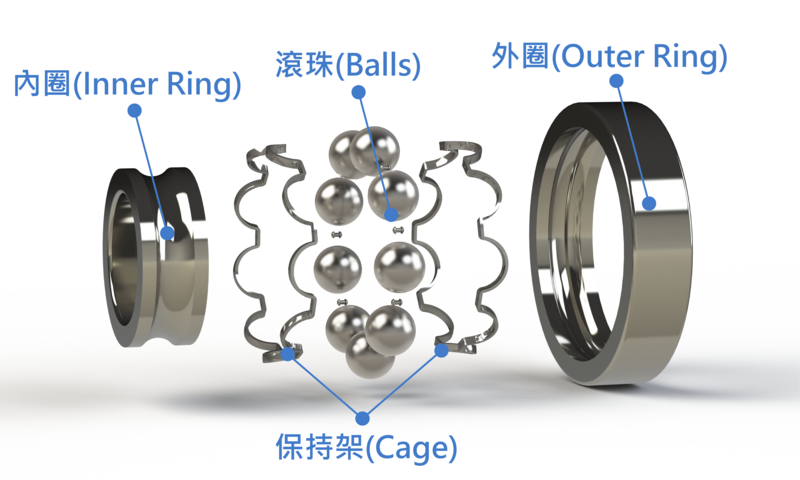
Bearing Introduction
A bearing is a mechanical component that enables rotational or linear motion, reduces friction, and supports load in moving systems.
Like wheels, bearings help components move smoothly by minimizing contact between surfaces. This not only improves motion efficiency but also extends machine life and operating speed. Bearings are widely used in mechanical systems requiring rotation or sliding, ensuring stability and performance.
Bearing Introduction
A bearing is a mechanical component that enables rotational or linear motion, reduces friction, and supports load in moving systems.
Like wheels, bearings help components move smoothly by minimizing contact between surfaces. This not only improves motion efficiency but also extends machine life and operating speed. Bearings are widely used in mechanical systems requiring rotation or sliding, ensuring stability and performance.
3. Common Rod End Bearing Types
There are various types of rod end bearings, each designed for specific applications and load capacities.
POS: Male Rod End
POS features a male-threaded shank and is used when the rod end needs to be threaded into a component. POS is composed of a steel inner ring and a bronze outer ring spherical sliding bearing. It has self-lubrication performance, wear resistance, shock resistance, corrosion resistance, and abrasion resistance.
| POS Series | ||||
|---|---|---|---|---|
| Bearing No. | d | S JIS 2 Grade | L | Weight(g) |
| POS 5 | 5 | M5x0.8 | 41 | 12.5 |