



Many maintenance engineers have encountered this situation.
A machine is lubricated on schedule, vibration remains low, and the bearing has not reached its expected fatigue life.
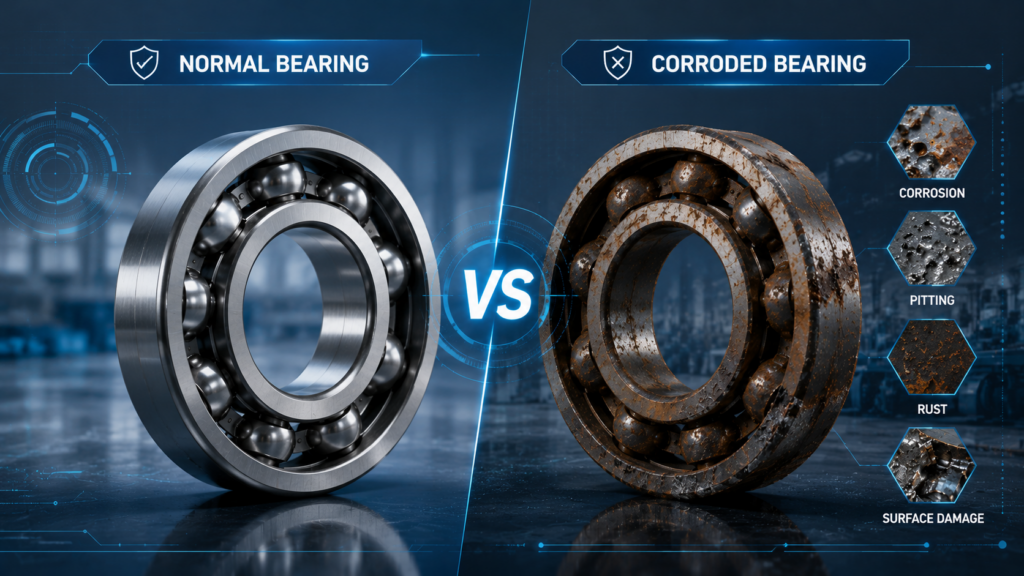
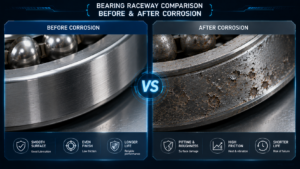
However, after disassembly, the raceway or rolling elements show black marks, rust-colored spots, tiny pits or irregular surface damage.
In many cases, this is not normal mechanical wear, but a type of bearing corrosion.
Because corrosion often develops slowly and without obvious symptoms, it is one of the most overlooked causes of premature bearing failure.
What Is Bearing Corrosion?
Bearing corrosion is a gradual deterioration of the bearing surface caused by chemical reactions, moisture, contaminated lubricants, electrical discharge or environmental pollutants.
Unlike fatigue damage, corrosion usually begins at the surface and progressively destroys the protective layer of the bearing steel.
Once corrosion starts, it can:
- Reduce surface hardness
- Destroy the lubricant film
- Increase friction
- Accelerate wear
- Generate vibration
- Shorten bearing service life
Even small corrosion pits can become stress concentration points that eventually lead to rolling fatigue.
Four Common Causes of Bearing Corrosion
1. Lubricant Oxidation
During long-term operation, lubricating oil or grease is continuously exposed to:
- High temperature
- Oxygen
- Mechanical shear
- Moisture
Over time, oxidation products and acidic compounds may form.
These substances gradually attack the bearing surface and reduce the lubricant’s protective ability.
Warning signs include:
- Darkened lubricant
- Increased viscosity
- Sludge formation
- Metallic particles in the lubricant
Regular oil analysis can help detect lubricant degradation before severe damage occurs.
2. Water and Contaminant Ingress
Water is one of the most common causes of bearing corrosion.
Moisture entering the bearing housing can destroy the lubricant film and accelerate oxidation.
Other contaminants may include:
- Coolant leakage
- Cleaning chemicals
- Dust
- Salt spray
- Chemical vapors
Once the lubricant becomes contaminated, corrosion can spread rapidly.
3. Electrical Erosion
Electrical current passing through a bearing can produce microscopic discharge marks on the raceway.
These electrical discharges generate extremely high local temperatures, melting tiny areas of the bearing surface.
Typical symptoms include:
- Frosted raceways
- Washboard patterns
- Dense microscopic pits
- Increased vibration
- High-frequency noise
Electrical erosion is frequently found in:
- Electric motors
- Variable frequency drive (VFD) motors
- Wind turbines
- High-speed industrial equipment
Proper shaft grounding or insulated bearings can help reduce this risk.
4. Chemical Corrosion
Certain chemicals may react with bearing materials or lubricants.
Possible sources include:
- Incompatible additives
- Industrial chemicals
- Acidic environments
- Sulfur-containing compounds
- Chlorine-containing cleaning agents
Chemical attack often begins slowly and becomes visible only after significant damage has already occurred.
How to Recognize Bearing Corrosion
Corrosion damage has several characteristics that distinguish it from ordinary wear.
Visual Inspection
You may observe:
- Random corrosion pits
- Black spots
- Brown or reddish rust
- Gray oxidation marks
- Local discoloration
Unlike rolling fatigue, corrosion pits generally have irregular shapes and random distribution.
Surface Characteristics
Corroded surfaces often appear:
- Rough
- Matt
- Uneven
- Without the smooth boundaries commonly associated with fatigue spalling
Under magnification, corrosion products usually remain attached to the damaged area.
Lubricant Inspection
Corrosion is often accompanied by lubricant deterioration.
Look for:
- Water contamination
- Sludge
- Metallic debris
- Abnormal discoloration
Routine lubricant analysis is an effective early-warning tool.
How to Prevent Bearing Corrosion
Preventing corrosion is generally much easier than repairing the damage.
Select Suitable Bearing Materials
For aggressive environments, consider bearings with improved corrosion resistance or special coatings.
Material selection should match the application environment rather than focusing only on load capacity.
Choose High-Quality Lubricants
Lubricants with good oxidation stability and corrosion protection can significantly extend bearing life.
Follow the manufacturer’s recommendations for lubricant type and replacement interval.
Prevent Moisture and Contamination
Effective sealing is one of the best defenses against corrosion.
Inspect seals regularly and prevent water, coolant or cleaning agents from entering the bearing housing.
Protect Against Electrical Current
For electric motors and inverter-driven equipment:
- Use insulated bearings where appropriate
- Improve shaft grounding
- Install grounding brushes or rings when required
Reducing shaft current helps prevent electrical erosion.
Monitor Lubricant Condition
Oil analysis can detect abnormal increases in metallic elements and contamination before visible damage occurs.
Routine monitoring allows maintenance teams to intervene before corrosion becomes severe.
Why Corrosion Greatly Reduces Bearing Life
A rolling bearing depends on an extremely smooth raceway surface.
Corrosion creates microscopic defects that interrupt the rolling contact.
These defects increase contact stress and accelerate fatigue cracking.
As a result, a bearing may fail long before reaching its theoretical service life.
Frequently Asked Questions
Can lubrication completely prevent bearing corrosion?
No.
Lubrication helps reduce corrosion risk, but moisture, contamination, electrical current and chemical attack can still damage the bearing.
Is rust always the first sign of bearing corrosion?
No.
Early corrosion may appear only as slight discoloration or microscopic pits before visible rust develops.
Can electrical current damage bearings?
Yes.
Electrical discharge can produce localized melting and pitting on the raceway surface, especially in electric motors and inverter-driven equipment.
Can a corroded bearing be reused?
Generally, no.
Once corrosion has damaged the raceway, the bearing’s fatigue life and running accuracy are significantly reduced.
Replacement is usually recommended.
How can corrosion be detected early?
Regular inspection should include:
- Lubricant analysis
- Visual examination
- Vibration monitoring
- Temperature monitoring
- Periodic bearing inspection
Conclusion
Bearing corrosion is one of the most overlooked causes of premature bearing failure.
Although it often begins as microscopic surface damage, corrosion can quickly develop into serious wear, vibration, noise and equipment downtime if left untreated.
By selecting the correct lubricant, preventing contamination, protecting against electrical current and monitoring lubricant condition, maintenance teams can significantly reduce corrosion-related failures and improve equipment reliability.
Need Technical Support?
If you are experiencing bearing corrosion, rust, pitting or unexplained surface damage, our engineering team can help analyze the failure and recommend the most suitable bearing solution.
USU Bearing
Bearing Failure Analysis | Bearing Selection | OEM Bearing Solutions