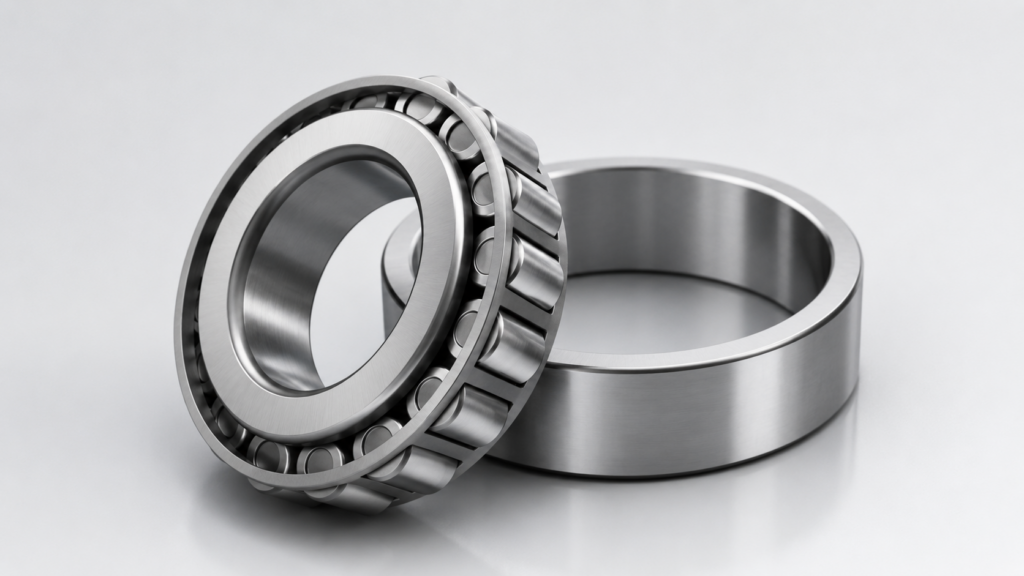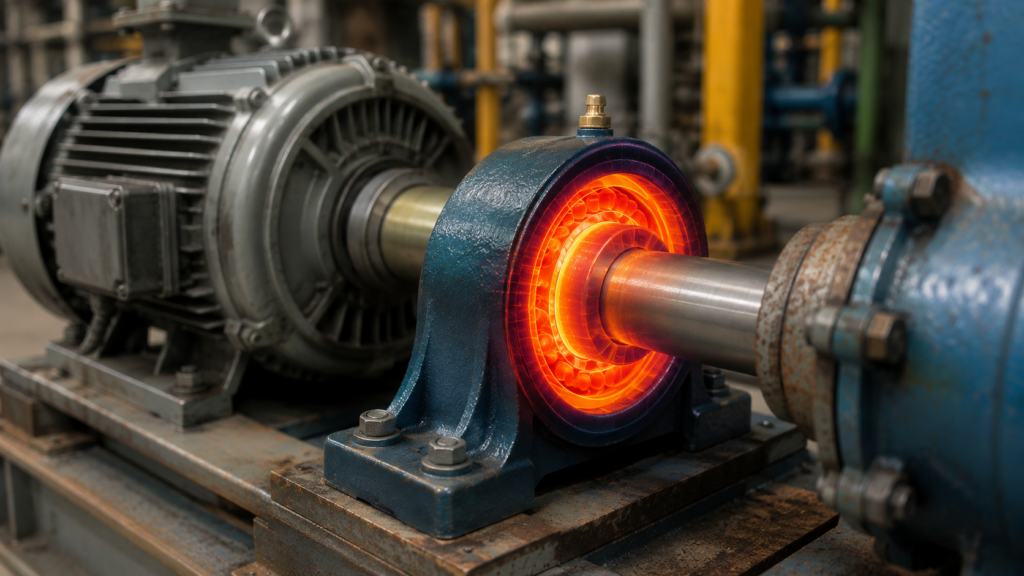




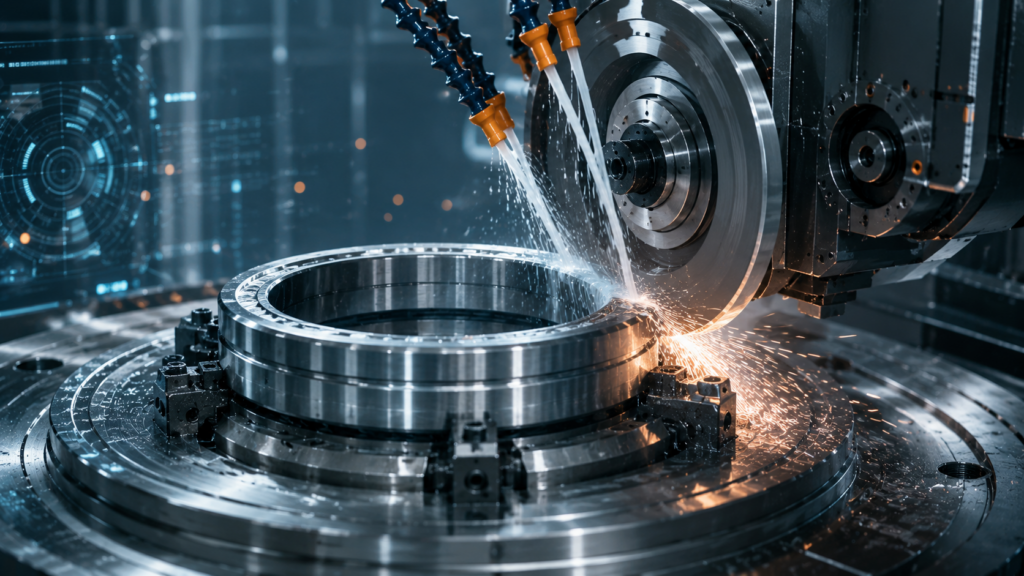
Bearing grinding burn refers to thermal damage that occurs on the raceway or ring surface during grinding.
During the grinding process, abrasive grains continuously cut and rub against the workpiece.
This creates:
- Cutting heat
- Friction heat
- Plastic deformation
- Internal molecular friction
Since each abrasive grain contacts the workpiece for only a very short time, a large amount of heat is generated almost instantly.
The grinding zone temperature may reach approximately 800–1500°C.
If this heat cannot be dissipated effectively, the surface layer of the bearing ring may undergo secondary hardening or tempering, changing the original metallographic structure.
This phenomenon is known as grinding burn.
Why Is Grinding Burn Harmful?
Grinding burn is much more than a cosmetic defect.
It can cause:
- Reduced surface hardness
- Residual tensile stress
- Micro cracks
- Reduced fatigue strength
- Increased vibration
- Higher operating temperature
- Shorter bearing service life
For high-precision bearings, even slight grinding burn may affect long-term reliability.
How Can Grinding Burn Be Identified?
Severe Grinding Burn
Severe grinding burn can usually be identified visually.
Typical characteristics include:
- Yellow discoloration
- Brown surface
- Blue oxidation
- Black oxide film
These colors indicate excessive grinding temperature.
Slight Grinding Burn
Slight grinding burn is much more difficult to identify.
Normally, it requires:
- Acid etching inspection
- Metallographic examination
- Barkhausen Noise testing (BN)
- Nital etching
After acid etching, the damaged area usually appears darker than the surrounding surface.
Common Types of Bearing Grinding Burn
The following grinding burn types are frequently found during bearing manufacturing.
1. Vibration Grinding Burn
Cause
Machine vibration
Grinding spindle vibration
Hydraulic pressure fluctuation
Workpiece vibration
When vibration occurs, the instantaneous grinding depth increases.
This generates localized overheating.
Characteristics
The burn appears as regular wave-shaped marks along the raceway.
It is often called:
Vibration Burn
2. Wheel Dressing Burn
Cause
Poor grinding wheel dressing.
After long-term use, abrasive grains become dull.
Instead of cutting efficiently, the wheel rubs against the workpiece.
More friction produces more heat.
Characteristics
Burn marks follow the grinding wheel scratches.
This type is also called:
Grinding Scratch Burn
3. Fixture Slip Burn
Cause
Insufficient magnetic holding force
Loose centerless grinding support
Fixture movement
During grinding, the workpiece slips momentarily.
The grinding depth changes instantly.
Local overheating occurs.
4. Uneven Grinding Burn
Cause
Uneven grinding allowance
Unequal stock removal
Different grinding thickness
Certain areas remove more material.
Those areas generate more heat.
The result is localized grinding burn.
5. Uniform Grinding Burn
Cause
Grinding wheel hardness is too high.
Feed rate is excessive.
Workpiece speed is too high.
A higher workpiece speed reduces the cutting ability of the grinding wheel.
Instead of cutting, more rubbing occurs.
Heat builds across the entire surface.
Characteristics
The entire raceway exhibits relatively uniform discoloration.
How to Prevent Grinding Burn?
Grinding burn can be effectively reduced through proper process control.
The following measures are recommended.
Optimize Grinding Parameters
Use an appropriate:
- Feed rate
- Grinding depth
- Grinding speed
- Workpiece speed
Dress Grinding Wheels Regularly
A sharp grinding wheel cuts efficiently.
A dull wheel generates friction.
Regular dressing helps reduce heat generation.
Improve Cooling Performance
Adequate coolant flow is essential.
The coolant should reach the grinding zone effectively.
Poor coolant delivery is one of the main causes of grinding burn.
Reduce Machine Vibration
Regularly inspect:
- Grinding spindle
- Bearings
- Hydraulic system
- Fixture rigidity
Stable machining reduces localized overheating.
Maintain Proper Workpiece Clamping
Loose fixtures or insufficient magnetic force allow workpiece movement.
This immediately increases grinding depth and local temperature.
Monitor Surface Quality
Manufacturers should combine:
- Visual inspection
- Acid etching
- Metallographic analysis
- Barkhausen Noise testing (BN)
to detect grinding burn before assembly.
Why Does Grinding Burn Reduce Bearing Life?
A bearing depends on an extremely hard and stable raceway surface.
Grinding burn changes:
- Surface hardness
- Residual stress
- Metallographic structure
Once the original heat-treated layer is damaged, rolling contact fatigue develops much faster.
Even a slight grinding burn may significantly shorten bearing life under high-speed or heavy-load conditions.
Frequently Asked Questions
What causes grinding burn on bearing rings?
Grinding burn is mainly caused by excessive grinding heat generated by friction and insufficient heat dissipation.
Can grinding burn be repaired?
Generally, severe grinding burn cannot be repaired.
The damaged heat-treated layer has already changed.
The workpiece usually requires regrinding or rejection depending on the damage depth.
Is grinding burn visible?
Severe grinding burn is visible.
Slight grinding burn often requires acid etching or nondestructive testing.
Does grinding burn affect bearing life?
Yes.
Grinding burn reduces fatigue strength and may significantly shorten bearing service life.
How can grinding burn be prevented?
By:
- Optimizing grinding parameters
- Dressing grinding wheels regularly
- Improving coolant delivery
- Reducing machine vibration
- Ensuring proper fixture stability
Conclusion
Grinding burn is one of the most critical defects during bearing manufacturing.
Although some burns appear only as slight discoloration, they may significantly reduce the fatigue life and reliability of a bearing.
By controlling grinding parameters, maintaining sharp grinding wheels, improving cooling conditions, and reducing machine vibration, manufacturers can greatly reduce the occurrence of grinding burn and improve product quality.
Need Technical Support?
If you have questions about bearing manufacturing, bearing quality inspection, grinding defects, or bearing failure analysis, our engineering team is happy to help.
USU Bearing
Bearing Manufacturing | Bearing Failure Analysis | OEM Bearing Solutions