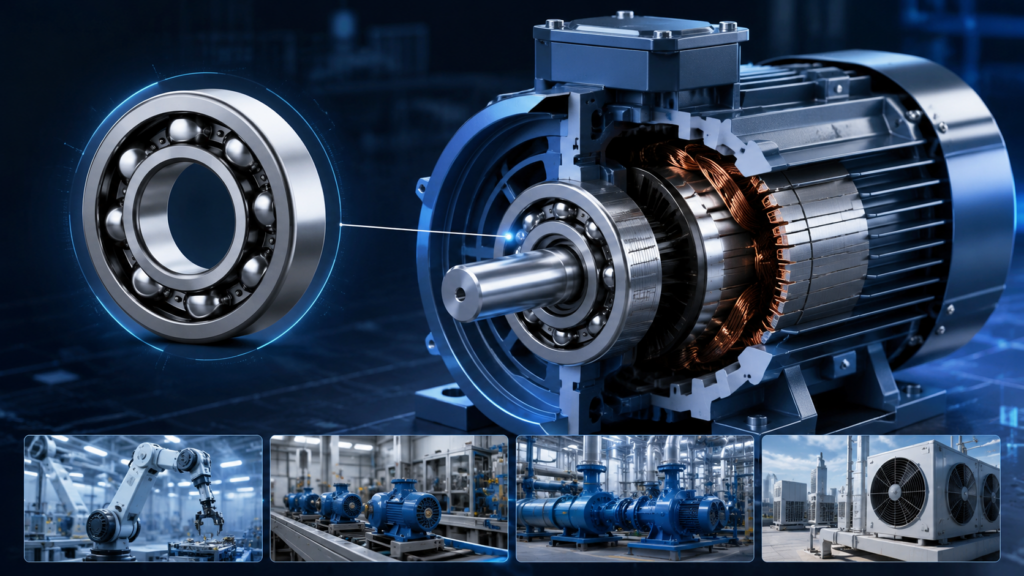




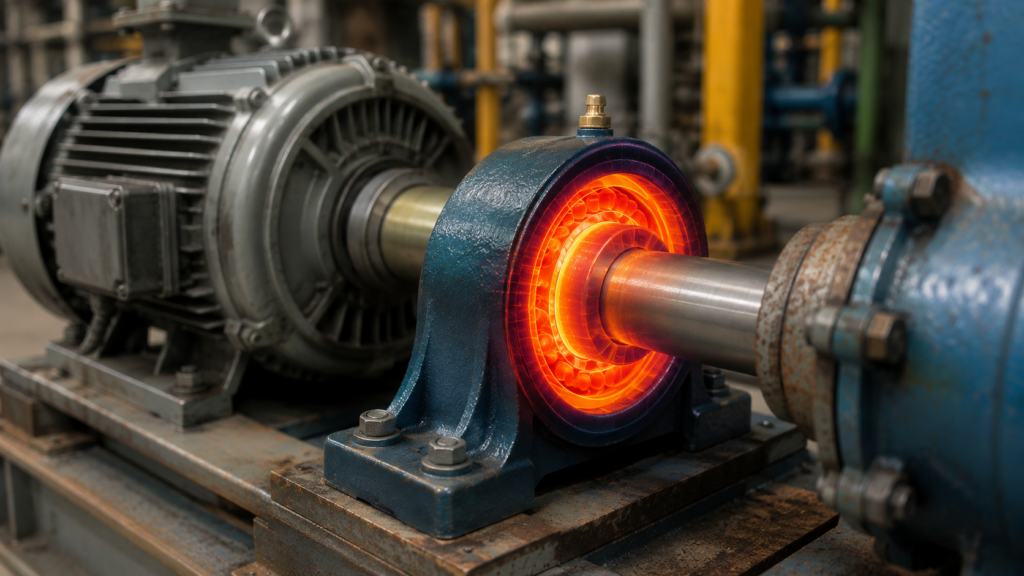
Quick Answer: Bearing overheating is commonly related to lubrication, internal clearance, incorrect fit, misalignment, installation problems, excessive load, speed, contamination, or internal bearing damage.
Bearing overheating is a common problem in electric motors, pumps, conveyors, fans, gearboxes, packaging machinery, and other rotating equipment.
A bearing may become warm during normal operation. However, if the bearing temperature continues to rise, suddenly becomes much higher than usual, or is accompanied by abnormal noise and vibration, the problem should be investigated.
In many cases, bearing overheating is not caused by the bearing alone.
Lubrication, bearing clearance, shaft alignment, installation, operating load, speed, contamination, and surrounding components can all affect bearing operating temperature.
This guide explains 10 common causes of bearing overheating and provides a practical troubleshooting process.
What Is Bearing Overheating?
Bearing overheating occurs when the heat generated during operation is greater than the heat that can be dissipated from the bearing arrangement.
Friction and heat are naturally generated when a bearing rotates under load. The bearing, lubricant, shaft, housing, seals, and surrounding environment all influence the final operating temperature.
The important question is not simply:
“Is the bearing hot?”
A better question is:
“Is the bearing temperature stable and consistent with its normal operating condition?”
A bearing that reaches a stable operating temperature may be functioning normally.
However, a continuously rising temperature, an unusual temperature change, or heat combined with abnormal noise or vibration may indicate a problem.
10 Common Causes of Bearing Overheating
1. Too Much Grease
Adding more grease does not always provide better lubrication.
Excessive grease can increase churning resistance inside the bearing and housing. As the rolling elements and cage move through the excess grease, additional resistance can generate heat.
This problem is especially noticeable in some higher-speed applications.
Common signs of excessive grease may include:
- Bearing temperature rises after relubrication
- Grease is pushed from the seal or housing
- Temperature increases shortly after machine startup
- The bearing runs hotter than it did before greasing
If a bearing begins to overheat immediately after adding grease, the grease quantity should be one of the first items checked.
2. Insufficient Lubrication
Too little lubricant can also cause a bearing to run hot.
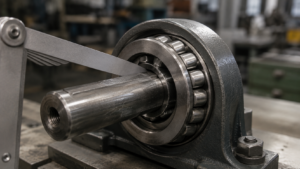
A suitable lubricant helps separate rolling contact surfaces and reduce friction and wear.
When lubrication is insufficient or the lubricant has deteriorated, the lubrication condition between the rolling elements and raceways may become inadequate.
This can lead to increased friction, heat, wear, and eventually bearing damage.
Possible signs include:
- Abnormal bearing noise
- Increasing temperature
- Surface discoloration
- Raceway or rolling element damage
- Premature bearing failure
The correct lubricant quantity, lubricant type, and relubrication interval should be considered together.
3. Incorrect Bearing Internal Clearance
Bearing internal clearance can directly affect operating conditions.
Before installation, a bearing has an initial internal clearance. After mounting and during operation, this clearance may change.
An interference fit can reduce bearing internal clearance.
Temperature differences between the shaft, inner ring, outer ring, and housing can also change the operating clearance.
If the effective operating clearance becomes too small, internal loading and friction may increase.
Possible symptoms include:
- Rapid temperature increase
- High running temperature
- Abnormal noise
- Reduced bearing life
- In severe cases, bearing seizure
When investigating an overheating bearing, check whether the selected clearance class is suitable for the fit, speed, temperature, and application.
4. Incorrect Bearing Fit
The fit between the bearing and shaft or housing is an important part of the bearing arrangement.
If the fit is excessively tight, the bearing’s internal clearance may be reduced.
If the fit is too loose, movement between mating surfaces may occur.
Both conditions can create operating problems.
Before replacing the bearing, check:
- Shaft diameter
- Housing bore diameter
- Shaft tolerance
- Housing tolerance
- Shaft surface condition
- Housing condition
Do not assume that installing a new bearing will solve the problem if the shaft or housing dimensions are incorrect.
5. Shaft Misalignment
Misalignment can cause abnormal load distribution inside a bearing.
When connected shafts, housings, pulleys, or other machine components are not correctly aligned, the bearing may operate under unintended loading conditions.
Possible symptoms include:
- Bearing overheating
- Increased vibration
- Abnormal noise
- Uneven wear patterns
- Repeated bearing failure
If the same bearing position repeatedly fails, shaft alignment and the complete machine arrangement should be inspected.
Replacing only the bearing may provide a temporary solution without correcting the root cause.
6. Improper Bearing Installation
Incorrect installation can damage a bearing before the machine even begins normal operation.
One common mistake is applying mounting force through the rolling elements.
For example, when mounting a bearing onto a shaft, installation force should not be transferred from the outer ring through the balls or rollers to the inner ring.
Improper mounting force can damage raceways and rolling elements.
Other installation problems include:
- Hammering the bearing directly
- Installing the bearing at an angle
- Using dirty mounting tools
- Incorrect heating procedures
- Damage to seals
- Incorrect locking
- Failure to check the shaft and housing
If a new bearing overheats or makes noise soon after installation, the mounting process should be reviewed.
7. Excessive Load
Every bearing operates under a specific combination of radial load and axial load.
Unexpected or excessive loading can increase internal stress and friction.
However, the bearing itself may not be the original source of the excessive load.
Possible causes include:
- Excessive belt tension
- Incorrect chain tension
- Rotor imbalance
- Shaft misalignment
- Unexpected axial force
- Machine overload
- Incorrect bearing selection
For electric motors and belt-driven equipment, excessive belt tension is an important condition to check.
A belt that is too tight can increase radial load on the shaft and bearings.
8. Excessive Speed or Incorrect Bearing Selection
Bearing speed capability depends on more than the bearing model number.
Lubrication, cage design, bearing clearance, load, sealing arrangement, installation, and operating temperature can all influence high-speed performance.
A bearing operating under unsuitable speed conditions may generate excessive heat.
When selecting a bearing for a high-speed application, consider:
- Rotational speed
- Bearing type
- Bearing size
- Lubrication method
- Lubricant viscosity
- Cage design
- Bearing clearance
- Load
- Heat dissipation
Do not select a bearing based only on bore diameter.
The complete operating condition should be evaluated.
9. Contamination
Dust, metal particles, moisture, and other contaminants can affect bearing operation.
Hard particles entering the bearing may create indentations or damage rolling contact surfaces.
Contaminated lubricant may also lose its ability to provide suitable lubrication conditions.
Common contamination sources include:
- Dirty installation environments
- Incorrect bearing storage
- Damaged seals
- Contaminated grease tools
- Dirty grease fittings
- Wear particles from surrounding machine components
When inspecting an overheating bearing, examine the lubricant.
Grease that is unusually dark or contains visible particles may provide useful information about the operating condition.
10. Internal Bearing Damage
Sometimes bearing overheating is a symptom of existing internal damage.
Raceway damage, rolling element damage, cage problems, corrosion, or advanced fatigue can increase vibration and friction.
Possible warning signs include:
- Grinding noise
- Clicking or irregular noise
- Increased vibration
- Rapid temperature increase
- Rough rotation
- Visible raceway damage
Once significant internal damage has occurred, adding more grease may not solve the problem.
The bearing should be inspected and replaced when necessary.
More importantly, the cause of the damage should be identified before the replacement bearing is installed.
How to Check an Overheating Bearing
When a bearing is running hot, do not immediately replace it without further investigation.
Use a systematic troubleshooting process.
Step 1: Record the Bearing Model
Identify the complete bearing designation.
For example:
6205 C3
6306 2RS
UCP208
The suffix can provide important information about seals, shields, clearance, and other bearing features.
Step 2: Check the Operating Speed
Record the actual machine speed in revolutions per minute.
Do not rely only on the motor nameplate if pulleys, belts, or gear reductions affect the final shaft speed.
Step 3: Measure the Temperature
Record:
- Ambient temperature
- Bearing housing temperature
- Machine startup temperature
- Temperature after 10 minutes
- Temperature after 30 minutes
- Stable operating temperature, if reached
A temperature trend is often more useful than a single temperature reading.
Step 4: Listen for Abnormal Noise
Check for:
- Grinding sounds
- Clicking sounds
- Squealing
- Humming
- Irregular metallic noise
Temperature combined with abnormal noise can provide more information than temperature alone.
Step 5: Check Vibration
Look for unusual vibration at the bearing position.
If vibration monitoring equipment is available, compare the current data with the machine’s previous operating condition.
Step 6: Inspect the Lubrication
Check:
- Grease type
- Grease quantity
- Last lubrication date
- Relubrication interval
- Grease condition
- Possible grease mixing
- Signs of contamination
Ask an important question:
“Did the bearing become hot before or after relubrication?”
The answer can significantly change the troubleshooting direction.
Step 7: Check the Shaft and Housing
Measure the shaft and housing if a fit problem is suspected.
Look for:
- Wear
- Scoring
- Corrosion
- Fretting
- Loose fit
- Incorrect dimensions
- Housing deformation
Step 8: Check Alignment and External Loads
Inspect:
- Shaft alignment
- Coupling alignment
- Belt tension
- Pulley alignment
- Rotor balance
- Axial loading
The bearing may be responding to a machine problem outside the bearing itself.
How to Reduce Bearing Temperature
The correct solution depends on the actual cause.
Possible corrective actions include:
- Use the correct lubricant
- Apply the correct quantity of grease
- Review the relubrication interval
- Check bearing internal clearance
- Verify shaft and housing fits
- Correct shaft misalignment
- Adjust excessive belt tension
- Improve sealing
- Prevent contamination
- Review operating speed and load
- Improve installation procedures
- Replace a damaged bearing
Avoid treating every overheating problem by simply adding more grease.
In some cases, adding additional grease can make the temperature problem worse.
Is 60°C Normal for a Bearing?
A bearing temperature of 60°C cannot be judged as normal or abnormal from the temperature value alone.
The complete operating condition should be considered.
Important factors include:
- Ambient temperature
- Bearing type
- Lubricant
- Seal design
- Operating speed
- Load
- Previous temperature trend
- Measurement location
For example, a bearing housing that reaches approximately 60°C and remains stable may require a different analysis from a bearing that rises from 40°C to 60°C, then continues toward 70°C and 80°C.
The temperature trend matters.
Abnormal noise, vibration, or a sudden change from the machine’s normal operating condition should also be investigated.
When Should You Replace an Overheating Bearing?
An overheating bearing should be inspected carefully before a replacement decision is made.
Replacement may be necessary if the bearing shows:
- Significant raceway damage
- Rolling element damage
- Cage damage
- Severe corrosion
- Rough rotation
- Persistent abnormal noise
- Severe vibration
- Signs of seizure or thermal damage
However, replacing the bearing without identifying the root cause can lead to repeated failure.
Before installing a new bearing, ask:
Why did the original bearing overheat?
Was the problem lubrication?
Was the fit too tight?
Was the bearing clearance unsuitable?
Was the shaft misaligned?
Was the belt tension excessive?
Was contamination present?
A successful bearing failure analysis should identify both the damaged component and the operating condition that caused the damage.
Bearing Overheating Troubleshooting Checklist
If your bearing is running hot, collect the following information:
- Bearing model and complete designation
- Equipment type
- Shaft speed in rpm
- Operating load
- Ambient temperature
- Bearing housing temperature
- Temperature trend
- Lubricant type
- Grease quantity
- Relubrication interval
- Operating hours per day
- Noise condition
- Vibration condition
- Shaft and housing dimensions
- Installation method
The more complete the operating information, the easier it is to identify the likely cause.
Frequently Asked Questions
What causes a bearing to overheat?
Common causes include excessive grease, insufficient lubrication, reduced operating clearance, incorrect bearing fit, shaft misalignment, improper installation, excessive load, unsuitable operating speed, contamination, and internal bearing damage.
Can too much grease cause bearing overheating?
Yes. Excessive grease can increase churning resistance inside the bearing arrangement and may increase operating temperature. If bearing temperature rises shortly after relubrication, grease quantity should be checked.
Why is my new bearing running hot?
A new bearing may run hot because of excessive grease, incorrect mounting, reduced internal clearance, an excessively tight fit, shaft misalignment, seal friction, or excessive external loading.
The installation and surrounding machine components should be checked before assuming that the new bearing is defective.
Is 60°C too hot for a bearing?
Not necessarily.
A single temperature value is not enough to determine the bearing condition. The lubricant, bearing design, speed, load, ambient temperature, measurement position, and temperature trend should be considered.
A stable temperature and a continuously rising temperature represent different operating conditions.
Can bearing clearance cause overheating?
Yes.
If the effective operating clearance becomes too small, internal loading and friction may increase. Bearing fit and temperature differences can reduce the operating clearance.
Should I add grease if a bearing is overheating?
Not automatically.
First check the current lubrication condition. If the bearing is already over-greased, adding more grease may increase the temperature problem.
Why does my bearing overheat after greasing?
Possible causes include excessive grease quantity, an unsuitable lubricant, lubricant incompatibility, or an existing bearing problem that was not caused by lubrication.
Check when the temperature started to rise and compare it with the relubrication time.
Can shaft misalignment cause a bearing to run hot?
Yes.
Misalignment can create abnormal load distribution and may contribute to increased vibration, noise, temperature, and premature bearing damage.
Need Help Analyzing a Bearing Overheating Problem?
Bearing overheating is not always a bearing quality problem.
Lubrication, clearance, fit, alignment, installation, load, speed, and contamination should all be considered during troubleshooting.
If you are experiencing bearing overheating, abnormal noise, vibration, or repeated bearing failure, send USU Bearing the following information:
- Bearing model
- Machine or equipment type
- Operating speed
- Operating temperature
- Operating hours
- Lubrication method
- Photos or videos of the bearing application
Our team can help review the operating conditions and provide bearing selection and application recommendations.
USU Bearing
Bearing Selection | Failure Analysis | OEM Bearing Solutions