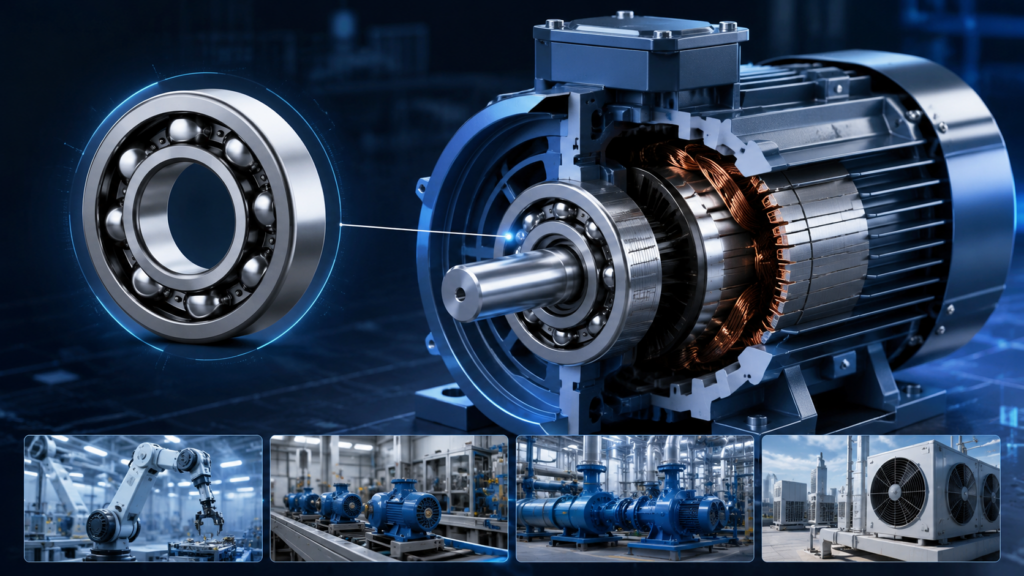




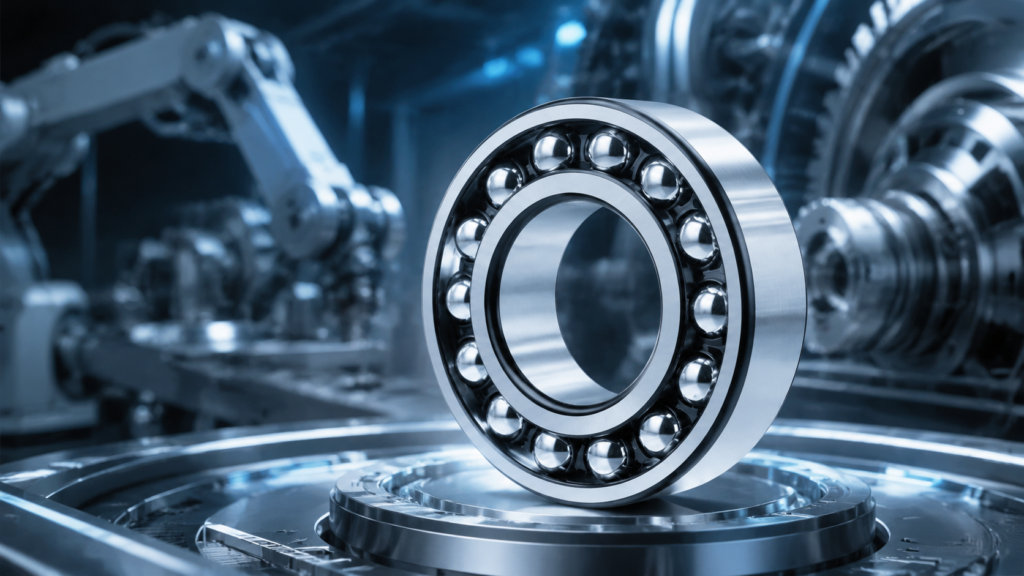
During the operation of mechanical equipment, bearings play a vital role in supporting rotation, reducing friction, and transmitting loads. When new equipment is first put into service, it typically runs smoothly. Over time, however, some machinery may gradually develop issues such as increased noise, noticeable vibration, and rising temperatures.
Behind these symptoms, bearing wear is often the main culprit. Bearing wear is rarely caused by a single factor; rather, it is the cumulative result of various elements, including lubrication, sealing, loads, installation, and the operating environment. Promptly identifying the type of wear and taking the correct corrective actions are essential methods for extending bearing service life and reducing equipment downtime.
I. Common Types of Bearing Wear
1. Adhesive Wear
Adhesive wear typically occurs under high-speed, heavy-load, or poor lubrication conditions. When the oil film between the rolling elements and raceways is insufficient, direct metal-to-metal contact occurs, and localized high temperatures can cause surface bonding and scuffing. Common symptoms include:
-
Surface scuffing / smearing
-
Localized burns
-
Elevated operating temperatures
-
Bearing seizure in severe cases
2. Abrasive Wear
Abrasive wear is primarily caused by foreign contaminants—such as dust, sand, and metal debris—entering the bearing interior. These particles disrupt the lubrication film and scratch the surfaces of the raceways and rolling elements. Common causes include:
-
Seal failure
-
Contaminated grease
-
Unclean installation environments
-
Internal metal debris entering the bearing
3. Fatigue Wear
Fatigue wear is a common failure mode resulting from bearings subjected to cyclic loading over long periods. As operating hours accumulate, pitting and spalling gradually appear on the surfaces of the raceways or rolling elements. Common symptoms include:
-
Surface pitting
-
Localized spalling (flaking)
-
Increased vibration
-
Progressively louder noise
4. Corrosive Wear
When moisture, acidic/alkaline substances, or corrosive media enter the bearing, the metal surfaces are prone to rust and corrosion. Corrosion not only destroys the surface finish but also accelerates subsequent wear. Common application environments include:
-
Humid/moist environments
-
Food machinery
-
Chemical equipment
-
Outdoor machinery
-
Pumps and washdown equipment
5. Fretting Wear
Fretting wear typically occurs when there is micro-relative motion between the mating surfaces of the bearing, such as from equipment transport vibration, improper fit during installation, or long-term operation at micro-amplitudes. Common symptoms include:
-
Reddish-brown powder (cocoa) on mating surfaces
-
Wear on the housing bore or shaft surface
-
Loosened fits
-
Increased operational noise
II. Common Symptoms of Bearing Wear
When a bearing begins to wear out, the equipment usually sends out noticeable warning signals:
-
Increased Noise: Once the internal surfaces of the bearing are damaged, the rolling elements no longer run smoothly, generating abnormal noise or harsh sounds.
-
Increased Vibration: Raceway spalling, increased internal clearance, or installation misalignment will lead to elevated vibration levels.
-
Temperature Rise: Insufficient lubrication, increased friction, or bearing overload can cause abnormal spikes in bearing operating temperatures.
-
Unstable Operation: Severe wear affects the rotational accuracy of the equipment, leading to shaft runout, binding, or a drop in transmission efficiency.
III. Main Causes of Bearing Wear
-
Improper Lubrication: Insufficient grease, aged or degraded grease, incorrect lubricant selection, or mixing incompatible greases will severely intensify friction.
-
Seal Failure: Inadequate sealing performance allows dust, moisture, and impurities to penetrate the bearing, causing rapid abrasive wear.
-
Improper Installation: Utilizing brute force or hammers during installation, uneven pressure application, or poor fits between the shaft/housing and the bearing can induce premature bearing damage.
-
Abnormal Loading: Operating equipment under overload conditions, shaft misalignment, or subjecting it to impact/shock loads will accelerate bearing fatigue failure.
IV. Preventive Methods for Bearing Wear
1. Select the Right Bearing Type
Choose the appropriate bearing based on the equipment speed, load, temperature, and operating environment. Different products—such as deep groove ball bearings, cylindrical roller bearings, tapered roller bearings, and spherical roller bearings—have distinct scopes of application under varying working conditions.
2. Ensure Correct Lubrication
Select the proper grease or oil based on the equipment’s operating parameters, and inspect the lubrication status regularly to avoid oil starvation, contamination, or lubrication failure.
3. Enhance Sealing and Protection
In dusty, humid, or highly contaminated environments, prioritize bearing structures with superior sealing performance to minimize the entry of external impurities.
4. Standardize Installation and Maintenance
Always use specialized tools when installing bearings. Avoid direct hammering on the bearing, and ensure the cleanliness and precision of the shaft, housing, and mating surfaces.
V. USU Bearings Solutions
USU Bearings provides tailored bearing products and technical support for a wide array of application scenarios, depending on our customers’ equipment operating conditions.
Our product portfolio includes:
-
Deep groove ball bearings
-
Angular contact ball bearings
-
Cylindrical roller bearings
-
Tapered roller bearings
-
Spherical roller bearings
-
Insert ball bearings (Pillow block bearings)
-
Non-standard customized bearings
To tackle bearing wear issues, USU Bearings assists customers with a comprehensive analysis spanning selection, lubrication, sealing, installation, and maintenance—helping facilities reduce failure rates and extend bearing service life.
Conclusion
Bearing wear does not happen overnight; it is a progressive process. Noise, vibration, and temperature rises are often the early warning signals sent by the bearing.
Rather than reactively replacing a bearing after it has completely failed, it is far more effective to analyze the root causes of wear beforehand and optimize lubrication, sealing, and installation methods. Only by identifying the true source of the failure can you effectively boost equipment reliability and mitigate downtime losses.
Adhering to the philosophy of “Superior Attitude, Superior Quality, Superior Service,” USU Bearings delivers stable, reliable bearing products and professional technical support to global clients, helping equipment achieve long-term, high-efficiency operation.