




The CA and CC types of spherical roller bearings differ primarily in their structural design. They are distinguished mainly by the presence or absence of flanges on the inner ring, and by whether the cage is a machined solid type or a stamped frame type; consequently, the two types are not interchangeable.
1.Structural Differences
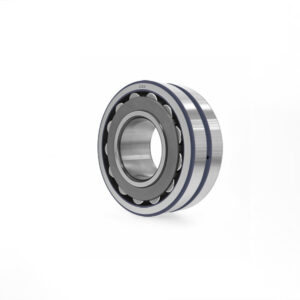
CA Type: Utilizes a machined brass cage. The inner ring features no central flange but has two small flanges at its ends; the rollers are symmetrical.
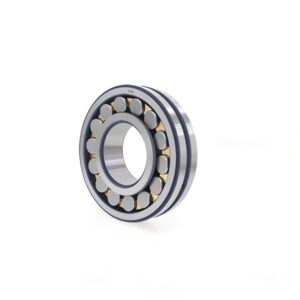
CC Type: Features symmetrical rollers. The inner ring is devoid of central or end flanges. The cage is split into two halves and is constructed from stamped steel. A movable guide ring is positioned between the rollers; this design effectively reduces internal friction within the bearing and assists rollers located in the non-load-bearing zone in correctly entering the load-bearing zone, thereby increasing the bearing’s limiting speed.
2.Internal Space Differences
CA Type: Designed for low-noise operation and possesses a certain degree of self-lubricating capability. The rollers occupy a relatively small amount of space, which limits the overall dimensions and quantity of the rollers themselves, thereby constraining the bearing’s load-carrying capacity; the cage incorporates its own movable guide ring.
Compared to a CA-type bearing of the same specifications, the CC type offers greater internal space, allowing for an increased load-carrying capacity through the inclusion of a larger number of rollers.
3.Differences in Axial Load-Carrying Capacity
In terms of application scenarios, the cage of the CA structure occupies a relatively large amount of internal space given the bearing’s limited external dimensions. This, to a certain extent, constrains the size and quantity of the rolling elements, thereby limiting the bearing’s potential to further enhance its radial load-carrying capacity.
Under conditions involving heavy loads and high speeds, the CC structure—typically found in spherical roller bearings—is the preferred choice. For instance, in high-temperature environments, the use of the CC type is mandatory.