



As a core transmission component in mechanical equipment, a bearing’s operational state directly impacts the stability and service life of the entire machine. Many users believe that bearing damage happens suddenly. In reality, however, most bearings undergo a progressive process that develops from minor wear into catastrophic failure.
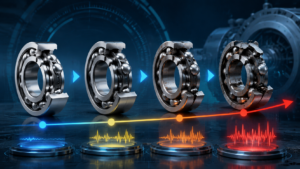
If anomalies can be detected during the early stages of failure and timely maintenance is performed, companies can not only slash repair costs but also prevent unexpected equipment downtime and boost production efficiency.
As a professional bearing supplier, USU Bearings recommends continuously monitoring bearing operating conditions by combining multiple indicators, including vibration, temperature, noise, and lubrication status.
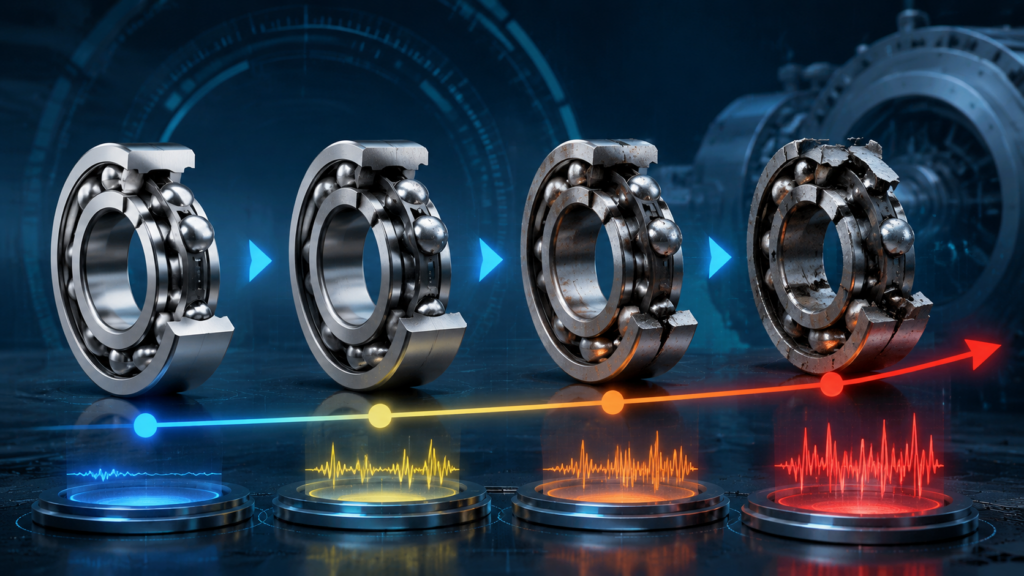
Stage 1: The Early Anomaly Stage
This is the initial stage of bearing failure progression. Minor wear begins to develop on the surface of the raceways or rolling elements, but the overall structure remains entirely intact.
At this point, the anomalies stem from microscopic friction and faint impacts, making it virtually impossible for human hearing to detect.
Key Characteristics:
-
Microscopic surface sub-surface defects appear.
-
Ultra-high-frequency vibrations emerge (typically above 20 kHz).
-
Vibration energy remains low.
-
No noticeable temperature changes.
-
Standard vibration meters cannot detect these signals.
This stage represents the prime window for predictive maintenance; potential issues can be caught early using professional condition monitoring equipment.
Stage 2: The Surface Damage Development Stage
As the equipment continues to run, the microscopic defects on the bearing surfaces gradually expand. Faint pitting, micro-cracks, or localized wear begin to emerge on the raceways.
Vibration signals strengthen significantly and may excite natural frequencies, leading to structural resonance within the equipment.
Key Characteristics:
-
High-frequency vibration amplitudes increase noticeably.
-
Fault characteristic frequencies can be identified via envelope spectrum analysis.
-
Acceleration signals begin to show anomalies.
-
The equipment starts generating slight abnormal noises.
Scheduling maintenance or bearing replacement during this stage typically prevents more extensive damage to the machinery.
Stage 3: The Noticeable Damage Stage
When a bearing enters Stage 3, fatigue wear intensifies rapidly. The spalling area on the raceways expands, and the failure progression accelerates significantly.
During operation, abnormal noises can now be easily heard by ear, accompanied by pronounced vibration.
Key Characteristics:
-
Ultra-high-frequency vibrations continue to rise.
-
Typical fault frequencies dominate the spectrum.
-
Vibration signals generate prominent harmonics and sidebands.
-
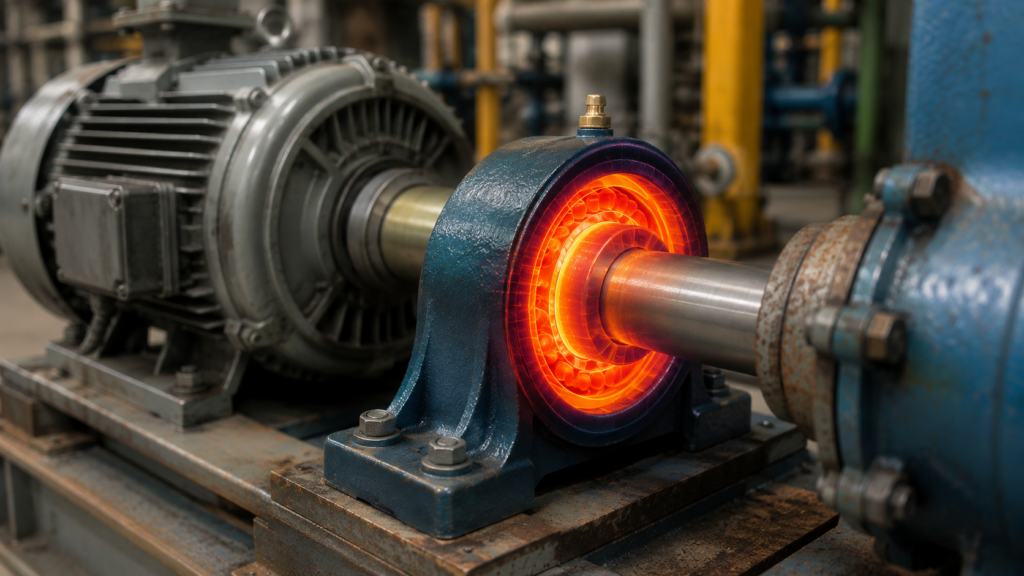
Operating temperatures gradually increase.
-
Equipment operational stability deteriorates.
At this juncture, it is highly recommended to schedule a shutdown inspection as soon as possible to prevent the fault from escalating.
Stage 4: The Severe Damage Stage
This is the final phase of bearing failure progression. The raceways, rolling elements, and the cage may all suffer catastrophic damage.
Notably, because the defects on the contact surfaces have been heavily ground down and flattened over a large area, certain ultra-high-frequency vibrations may actually drop. Therefore, one must not rely solely on a single parameter to judge a bearing’s health status.
Key Characteristics:
-
Large-scale spalling and severe wear.
-
The cage may become deformed or fractured.
-
Vibration frequencies shift drastically.
-
Noise levels increase significantly.
-
Temperatures rise continuously.
-
The equipment is on the verge of complete failure.
If operation continues, it is highly likely to cause collateral damage to associated components such as shafts, gears, and electric motors.
How to Detect Bearing Faults Early
To prevent bearings from entering the severe failure stage, it is advisable to make a comprehensive assessment by combining the following monitoring methods:
-
Vibration Monitoring: Analyzing changes in vibration frequency and amplitude is a vital method for determining bearing health.
-
Temperature Monitoring: Continuously recording bearing operating temperatures helps identify abnormal temperature spikes in a timely manner.
-
Noise Detection: Judging whether a bearing is worn by auditing changes in abnormal friction sounds, knocking sounds, or clicks.
-
Lubrication Status Inspections: Regularly checking whether grease is aged, contaminated, or insufficient to guarantee effective lubrication.
By combining multiple detection methods, issues can be spotted when the bearing is still in Stage 1 or Stage 2, drastically reducing the risk of equipment downtime.
USU Bearings Bearing Solutions
USU Bearings not only provides premium-quality bearing products but also delivers professional bearing application support tailored to diverse equipment operating conditions.
Our services include:
-
Bearing product selection
-
Operating condition analysis
-
Lubrication scheme recommendations
-
Fault diagnosis support
-
OEM customization services
-
Stable global supply
Through scientific selection and maintenance plans, we help clients enhance equipment reliability and extend bearing service life.
Conclusion
Bearing failure does not happen in an instant; it is a progressive journey from minor wear to severe destruction. From the emergence of ultra-high-frequency vibrations, to raceway spalling and increased noise, up to the final breakdown—each stage releases distinct fault signals.
Promptly recognizing these changes and executing the correct maintenance procedures is a vital step in safeguarding long-term, stable equipment operations.
Adhering to the philosophy of “Superior Attitude, Superior Quality, Superior Service,” USU Bearings delivers high-quality bearing products and professional technical support to global clients, helping enterprises cut maintenance costs and improve equipment operational efficiency.