



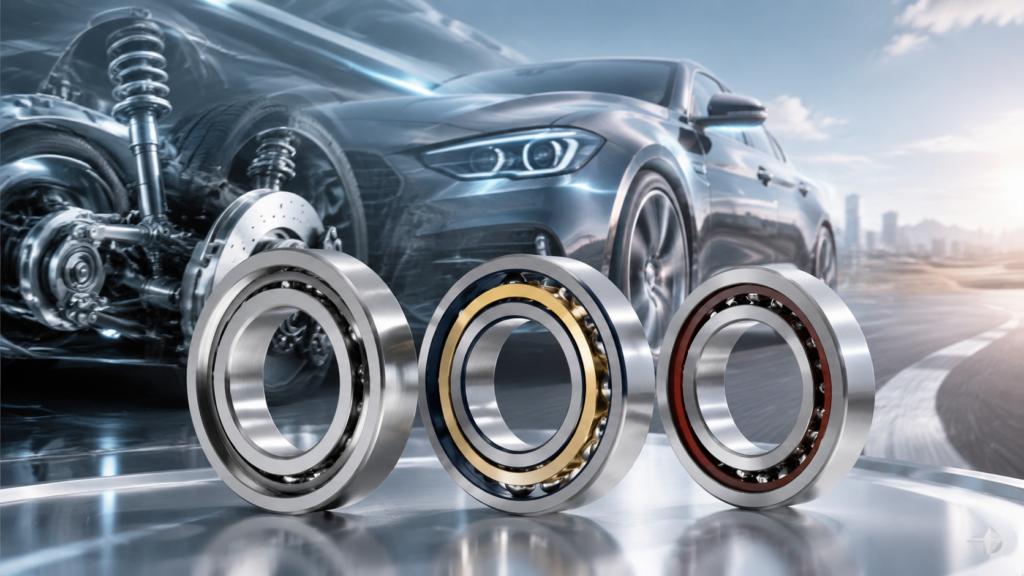
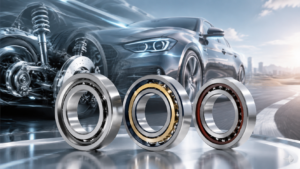
A typical vehicle is equipped with approximately 30 types and 50 sets of bearings, which are installed in various rotating components such as the engine, wheel hubs, drivetrain, clutch, and air conditioning system. The primary functions of automotive bearings are to reduce friction, support loads, ensure rotational accuracy, and extend the lifespan of components.
1. Hub Bearings
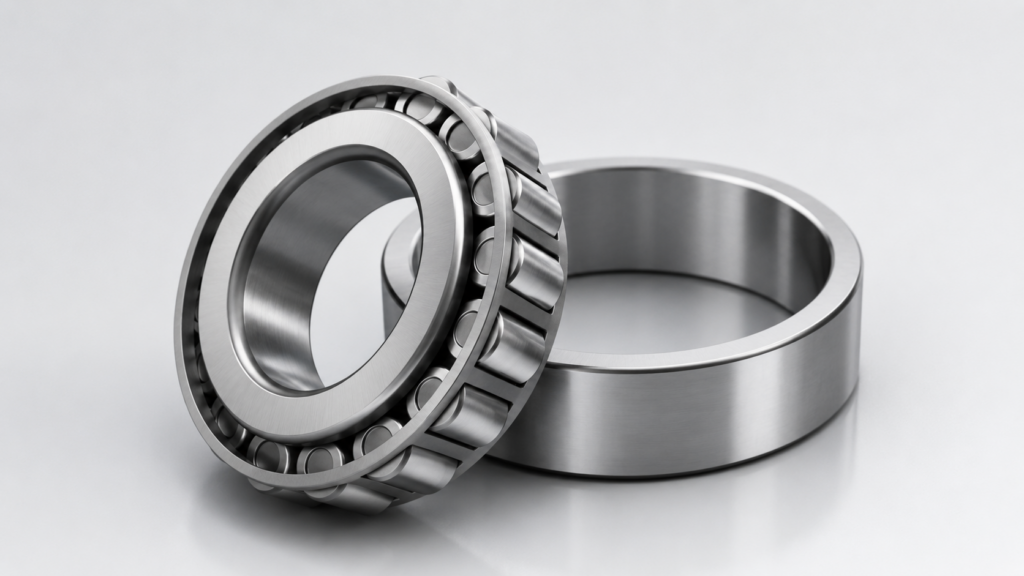
Hub bearings are primarily used in the wheel system to bear both radial and axial loads while providing precise guidance for the wheels. Modern passenger cars predominantly utilize wheel hub bearing units, which are optimized based on traditional angular contact ball bearings or tapered roller bearings, offering:
-
Compact structure and lightweight design
-
Pre-greased and maintenance-free operation
-
High load-carrying capacity
-
Compatibility with ABS systems
Key Installation & Maintenance Points
Periodically check hub bearings for abnormal noise or rotational resistance.
For front-wheel-drive (FWD) vehicles, it is recommended to replace hub bearings in pairs.
Use specialized tools for press-fitting and securing to prevent impact damage or contamination.
Hub bearings equipped with magnetic ABS encoder rings must be oriented correctly to ensure proper functionality.
2. Clutch Release Bearings
Located between the clutch and the transmission, the clutch release bearing can move axially along the clutch output shaft to achieve smooth engagement and disengagement of the clutch. Its key features include:
-
Capability to withstand axial loads, impact loads, and high-speed rotation.
-
Strict lubrication requirements due to high temperature rise under high-speed friction conditions.
-
High sensitivity to structural tolerances and installation accuracy to ensure reliability and service life.
3. Automotive Engine Bearings
Engine bearings are used in components such as the crank-connecting rod mechanism, valve timing system, alternator, water pump, and ventilators. Common types include:
-
Deep Groove Ball Bearings: Available in single or double rows, with or without seals; this is the most widely applied type.
-
Cylindrical Roller Bearings: Capable of withstanding large radial loads, making them suitable for heavy-duty areas.
Critical Considerations
-
Matching the limiting speed of the bearing with the actual operating speed.
-
Sealing designs that balance dustproofing, mudproofing, and heat dissipation.
-
Grease selection that ensures low noise and high-temperature adaptability.
4. Tensioners and Housed Bearing Units
Tensioner bearings are used in timing belts and synchronous drive systems to maintain stable belt tension while suppressing vibration and noise. Housed rolling bearing units are used for fans, pumps, and other adjustable mechanical devices, featuring:
-
Self-aligning design to compensate for installation errors.
-
High load capacity to withstand both radial and axial loads.
-
Excellent sealing performance against dust, water, and oil.
-
Easy installation and maintenance, pre-lubricated with grease for convenient field replacement.
5. Performance and Lifespan Enhancement
The enhancement of automotive rolling bearing performance and lifespan is achieved primarily through:
-
Standard Bearing Optimization: Optimizing structure, precision, and clearance selection to improve load capacity and wear resistance.
-
Development of Specialized Bearings: Designing dedicated hub bearings, clutch release bearings, and tensioner bearings to meet specific automotive operating conditions.
-
Structural and Functional Expansion: Optimizing the ease of installation, assembly, and maintenance while reducing overall vehicle costs.
As automotive designs diversify and performance requirements increase, bearing technology will continue to evolve to meet the high reliability and long lifespan demands of modern vehicles.
Summary
Rolling bearings play a core role in automobiles. From the wheels and engine to the drivetrain, every bearing directly impacts vehicle reliability and driving performance. Proper selection, correct installation, and regular maintenance are critical to ensuring the long-term, stable operation of automotive bearings.
USU Bearings is committed to providing high-quality, highly reliable rolling bearing products and technical support for the automotive industry, helping customers achieve safe and efficient vehicle operation.