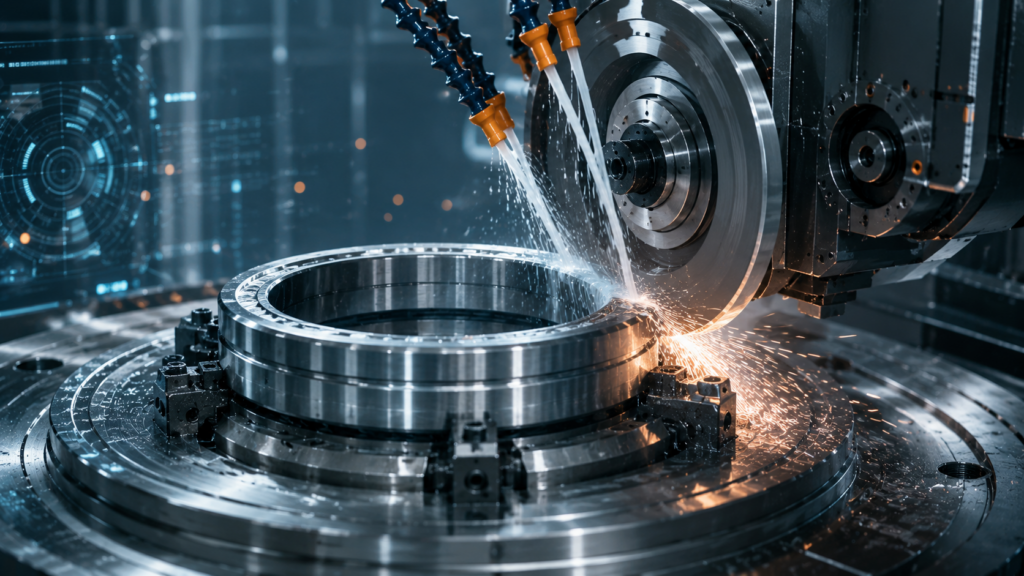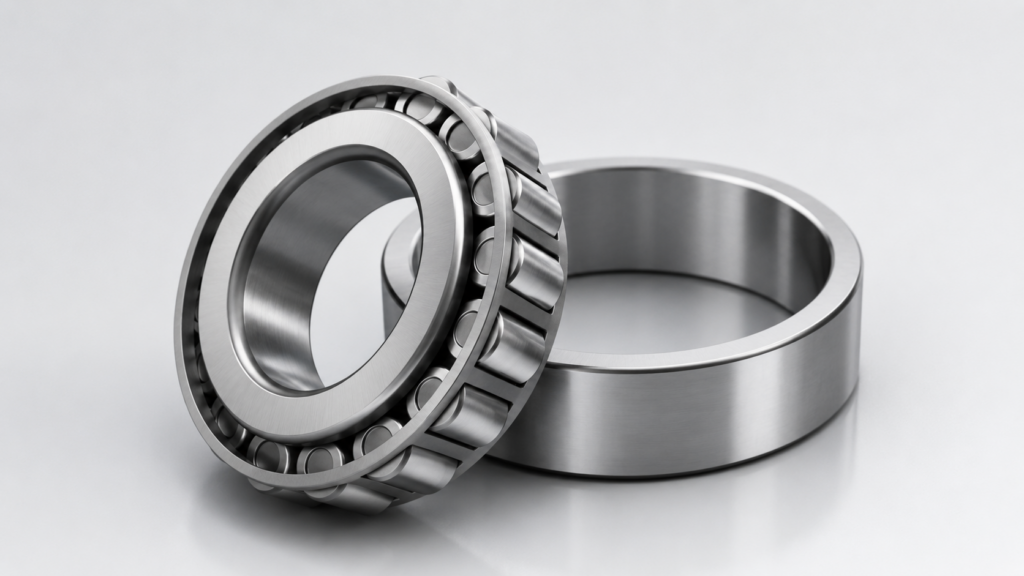




During the manufacturing process of rolling bearings, after the bearing ring raceways are ground, a final precision finishing process is usually required. This process is known as finishing processing of the bearing rolling surfaces.

The reason finishing processing is necessary is that the surface quality of the raceway directly affects the bearing’s rotational accuracy, vibration and noise level, load-carrying capacity, and service life. Conventional grinding alone is often unable to fully meet the technical requirements for surface roughness, waviness, and geometric accuracy.
Therefore, finishing processing has become one of the key technologies in the production of high-quality bearings.
Below, Wuxi USU Bearing provides a detailed introduction to the main functions and technical requirements of finishing processing for rolling bearing ring rolling surfaces.
1. Reducing Raceway Surface Roughness
The roughness of the rolling surface directly affects the operating condition and service life of the bearing.
If the surface is too rough, problems such as increased friction, excessive temperature rise, and abnormal wear are likely to occur during operation. Through finishing processing, the roughness of the raceway surface can be further reduced, allowing the rolling elements to operate more smoothly.
Generally, a raceway surface roughness within the range of:
Ra 0.08–0.04 μm
is considered appropriate.
It should be noted that lower roughness is not always better. If the surface becomes excessively smooth, it may hinder oil film formation under insufficient lubrication conditions, while also increasing machining costs.
2. Reducing Roundness Error and Waviness
The roundness error and waviness of bearing raceways have a significant impact on bearing performance.
Extensive practical experience has shown that excessive waviness can cause increased vibration, higher noise levels, reduced rotational accuracy, and lower load-carrying capacity during high-speed operation.
Therefore, improving raceway roundness and waviness through finishing processing can effectively enhance bearing operating stability.
3. Improving Raceway Geometric Accuracy
In addition to surface roughness, the geometric accuracy of the raceway cross-section also affects bearing life.
The groove arc profile, raceway crowning, and contact curve all influence the stress distribution between the rolling elements and the raceway.
Through finishing processing, the raceway profile can be further corrected to improve contact uniformity, reduce localized stress concentration, and enhance bearing load capacity and fatigue resistance.
As industrial equipment continues to demand higher speed and precision, the bearing industry’s requirements for raceway geometric accuracy are becoming increasingly stringent.
4. Improving the Physical and Mechanical Properties of the Rolling Surface
During grinding operations, the rolling surface is subjected to significant grinding force and high temperatures.
The grinding zone temperature may even reach:
750–1200°C
Such high temperatures can alter the metallographic structure of the surface layer and create defective layers or tensile stress layers, which negatively affect bearing fatigue life.
One of the key functions of finishing processing is to remove these damaged surface layers and improve the physical and mechanical properties of the raceway surface.
After treatment, finishing processing can effectively:
- Improve contact fatigue strength
- Reduce surface stress concentration
- Enhance wear resistance
- Extend bearing service life
The Importance of Finishing Processing for Bearing Performance
As modern industrial equipment continues to develop toward higher speed and higher precision, the requirements for bearing machining quality are becoming increasingly strict.
High-quality finishing processing not only improves bearing operating stability, but also helps equipment achieve:
- Lower noise
- Reduced vibration
- Higher operating speeds
- Longer service life
As a professional bearing service supplier, Wuxi USU Bearing continues to provide customers with bearing technical support, industry solutions, and bearing application services.
For more information about bearing machining processes and product technical data, please feel free to contact Wuxi USU Bearing for further communication.